What Happens After a Pest Infestation: Cleaning and Sanitation Explained
Most people think a pest problem is over the day the rats, mice or insects are gone. In reality, the treatment itself is often only half the job. An infestation leaves things behind: droppings, urine, nesting material, dead animals in voids, and bacteria on surfaces where the pests have travelled. What remains can affect both the health of the household and the risk of the problem returning, which is why the cleanup deserves as much attention as the treatment.
This is why skadedyrsanering, professional pest sanitation, is often recommended as the final stage after an infestation has been dealt with. It closes the loop between removing the animals and actually restoring the home to a clean, safe state. Here is what that work involves and why it matters.
Why treatment alone is not enough
Rodents in particular leave a surprising amount behind. Droppings and urine accumulate along their runways and around nests, soaked insulation loses its function, and carcasses in wall cavities or under floors create odour problems that can last for weeks. Just as important, the scent trails left by a previous population act as a signpost for new arrivals, telling them that this building has worked as a home before. Insect infestations leave their own residue, from shed skins and droppings to dead insects in cracks and voids.
What professional sanitation involves
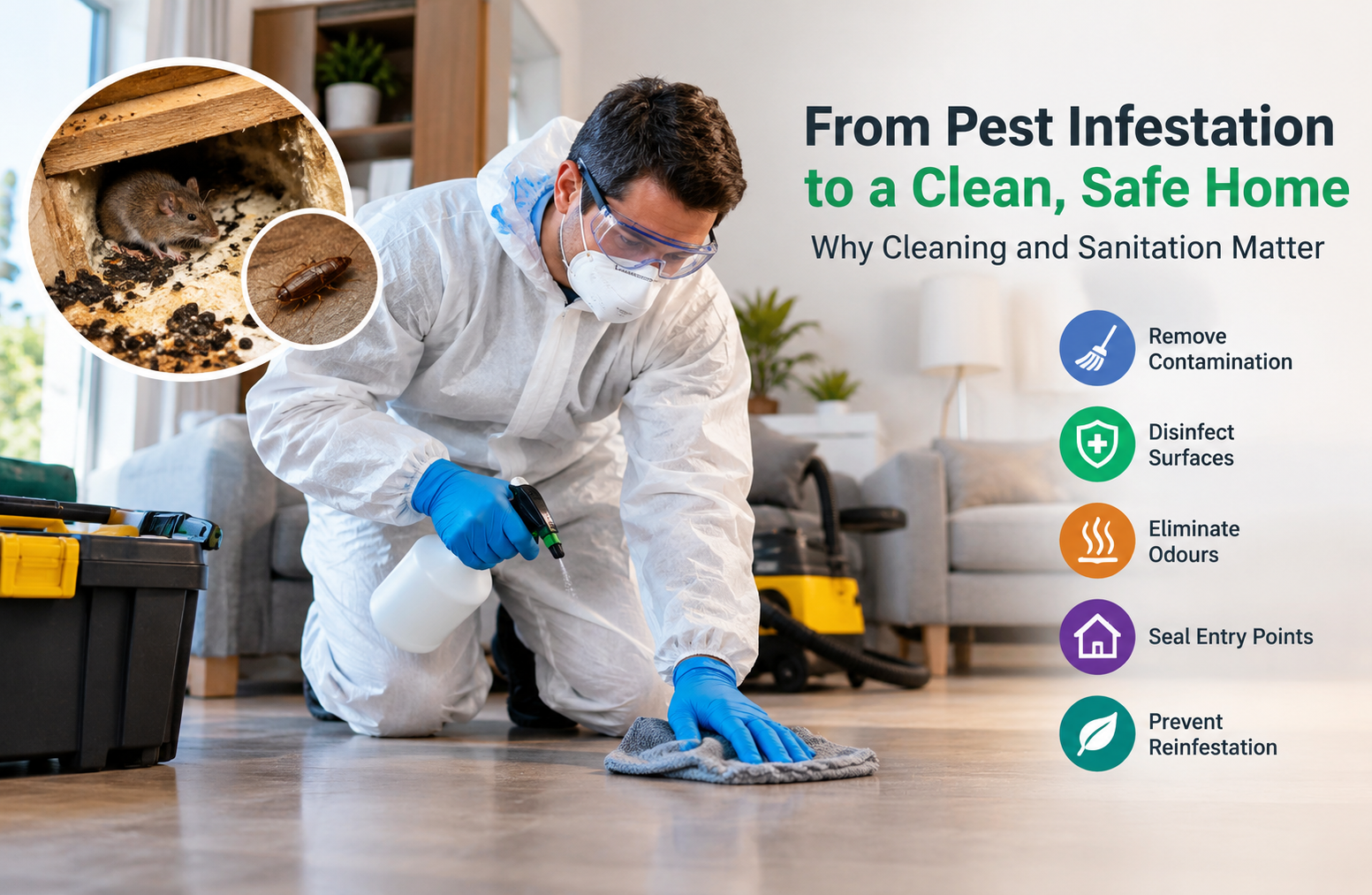
Professional sanitation starts with locating every area the pests actually used, not just the ones that are easy to see from the living space. Contaminated materials such as droppings, nests and ruined insulation are removed safely, affected surfaces are cleaned and disinfected, and odour sources are dealt with. Where insulation in attics or floor voids has been destroyed, it is replaced. The work is done with proper protective equipment, because disturbing dried rodent droppings without protection can release harmful particles into the air.
Securing the building against a repeat
A thorough job also includes the building itself. Entry points that were identified during treatment are sealed permanently, from gaps around pipework to damaged air vents and openings under doors. Combining cleanup with proofing is what separates a lasting result from a temporary pause, since an open route into a freshly cleaned building will eventually be found again by the next animal that passes.
The health perspective
Rodents can carry bacteria that spread through droppings and urine, and insect infestations can leave allergens behind in dust. Households with children, elderly members or people with respiratory conditions have particular reason to take the after-phase seriously. A sanitised home is not just more pleasant, it is more hygienic in a way the household can actually notice.
What you can safely do yourself
Light cleanup after a minor problem is manageable for most people with the right precautions: wear gloves and a well-fitting mask, dampen droppings with a household disinfectant before wiping them up rather than vacuuming or sweeping them dry, and wash the area afterwards. Where the contamination is extensive, sits inside wall or floor constructions, involves dead animals you cannot reach, or follows a long-running infestation, the job belongs with professionals who have the equipment and the experience to do it without spreading the problem through the house.
Modern pest control has moved far beyond simply killing what crawls or scurries. The goal today is a complete process: remove the pests, remove what they left behind, and close the building so history does not repeat itself. If you have just been through an infestation, make sure the job is finished all the way to that last step.