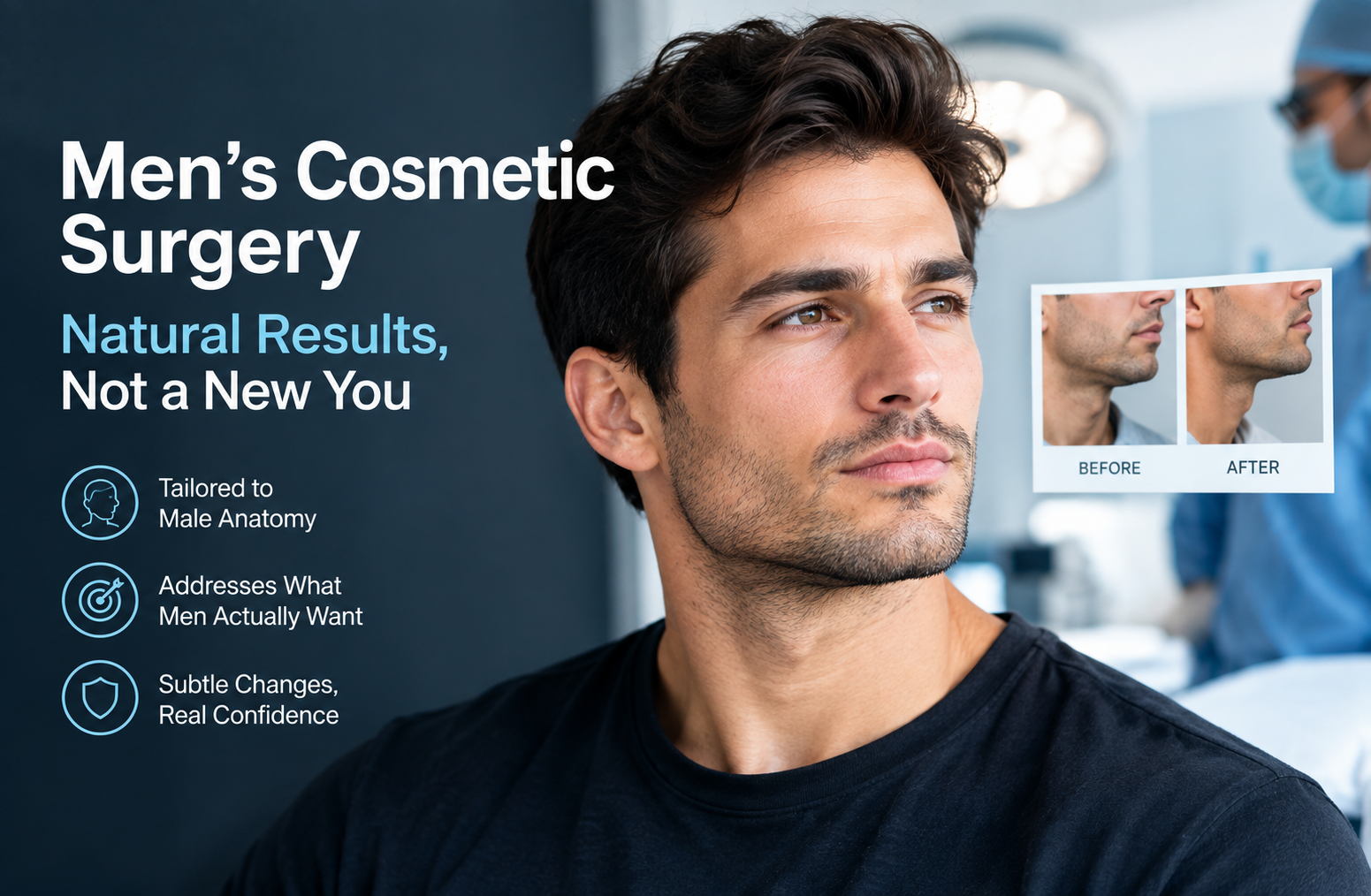
Plastic Surgery for Men: A Growing Trend and What Makes It Different
Men now account for a meaningful and growing share of cosmetic procedures in the United States, a shift driven by longer working careers, changing attitudes, and treatments that produce natural results without obvious signs of intervention. Yet much of the information available still addresses female patients by default, leaving men with questions that go unanswered. The differences are real, both anatomically and in what men typically want, and understanding them leads to better outcomes.
Different Anatomy Requires Different Technique
Male and female facial and body anatomy differ in ways that matter surgically. Men typically have thicker skin with richer blood supply, stronger facial musculature, different fat distribution patterns, and beard-bearing skin on the face that affects where incisions can be hidden. Facial proportions differ too: a stronger jawline, flatter brow position, and less upper eyelid show generally read as masculine.
A surgeon who applies techniques designed for female patients without adjusting can produce results that look subtly wrong, feminizing features rather than refreshing them. Experience with male patients specifically is therefore a legitimate thing to ask about.
What Men Most Commonly Seek
The most requested procedures among men consistently include eyelid surgery, which addresses the tired appearance that affects professional presence, and treatments for the neck and jawline, where definition is lost early. Body contouring, particularly of the flanks and abdomen, addresses areas resistant to training. Gynecomastia surgery, correcting excess breast tissue, remains one of the most common and most satisfying male procedures, addressing something many men have been self-conscious about since adolescence. Non-surgical treatments have grown quickly as well, with injectables used conservatively to soften lines without eliminating expression.
Practices experienced in cosmetic surgery for male patients typically approach all of these with a common goal: looking refreshed and fit rather than looking treated.
The Aesthetic Goal Is Usually Restraint
Men in consultations overwhelmingly describe wanting to look like themselves on a better day. Nobody should be able to identify what changed. That goal shapes technique: preserving masculine landmarks, keeping brow position low, maintaining fullness rather than over-reducing, and treating conservatively with the option to do more later.
Practical Considerations Men Should Know
A few differences deserve mention. Thicker skin and stronger blood supply can mean more bruising and swelling, so downtime estimates should be taken seriously rather than optimistically. Facial procedures require planning around beard growth patterns. And men, statistically less likely to have regular medical care, should ensure basic health screening is current before elective surgery, since anesthesia and healing depend on it.
Choosing the Right Surgeon
Ask specifically about experience with male patients and request before-and-after photographs of men. Look for results that appear natural and appropriately masculine rather than generically smoothed. Verify board certification, accredited facility use, and expect a consultation focused on your goals and anatomy.
The growth in male cosmetic surgery reflects a simple reality: results have become good enough to be invisible. Choose a surgeon who understands the difference, be clear that natural is the goal, and the outcome should be exactly what most men want, looking like themselves, only less tired.