What Is My Item Worth? A Simple Guide to Finding Resale Value Before Selling
Have you ever found an old item at home or spotted something interesting in a thrift store and wondered how much it could sell for? Knowing the resale value of an item can help you make smarter decisions and avoid selling valuable belongings too cheaply. If you are asking yourself what is my item worth, you can use a photo-based valuation tool to check estimated resale prices based on recent sales. This simple approach makes it easier to understand an item’s potential value before listing it online.
Why Knowing Your Item’s Value Matters
Many people have useful or valuable belongings sitting in closets, garages, and storage rooms. Some items may have a higher resale value than expected, while others might not attract much buyer interest.
Understanding an item’s worth helps you:
- Set realistic prices when selling online.
- Avoid accepting offers that are too low.
- Identify valuable items while shopping secondhand.
- Decide which belongings are worth listing.
- Save time researching similar products.
Whether you are an occasional seller or regularly buy and resell products, accurate pricing information can make a noticeable difference.
How to Find Out What Your Item Is Worth
Finding the resale value of an item does not have to involve hours of research. Several practical methods can help you estimate a reasonable selling price.
1. Use a Photo-Based Valuation Tool
One convenient way to check an item’s value is to upload a photograph to a resale valuation tool.
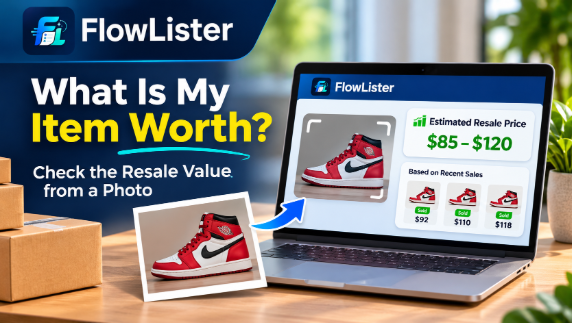
FlowLister offers a feature that estimates resale value using a single photo. The tool provides an estimated price range based on recent sales, helping sellers understand what similar items have sold for.
This approach is particularly useful when visiting thrift stores, sorting through household belongings, or reviewing unsold inventory.
2. Check Recently Sold Listings
Looking at completed sales is often more useful than checking current asking prices.
A seller might list an item for $150, but that does not mean buyers are willing to pay that amount. If similar products recently sold for $70 to $90, those figures provide a more realistic starting point.
Pay attention to the item’s condition, brand, model, and included accessories when comparing prices.
3. Research the Brand and Model
Certain brands and product models attract more buyer interest than others.
Look for identifying information such as:
- Manufacturer names and logos.
- Model numbers or product codes.
- Original packaging and labels.
- Manufacturing dates.
- Special features or limited editions.
These details can help you find closer matches and improve your price estimate.
What Factors Affect an Item’s Resale Value?
Two similar products can sell for very different amounts. Understanding the reasons behind these differences can help you answer the question, what is my item worth, more accurately.
Condition and Appearance
Condition is one of the biggest factors affecting resale value.
Items that are clean, functional, and free from major damage generally attract stronger offers. Scratches, missing parts, stains, or mechanical problems can reduce the price.
Be realistic about the condition when comparing your item with recently sold products.
Brand Recognition
Recognizable brands often attract buyers because people are familiar with their quality and features.
However, brand recognition alone does not guarantee a high resale price. The specific product, its age, and current buyer demand also matter.
Market Demand
An item’s resale value can change as customer interests shift.
For example, certain electronics may lose value when newer models become available. Meanwhile, older collectibles or discontinued products may become more desirable.
Checking recent sales helps you understand current demand rather than relying on outdated estimates.
Original Accessories
Products with their original boxes, manuals, chargers, or accessories may sell for more than incomplete items.
Before listing something, check whether you still have the accessories that originally came with it.
Using Resale Value Estimates While Thrift Shopping
Thrift shopping can be an excellent way to find products worth reselling. However, not every inexpensive item offers a worthwhile opportunity.
Imagine finding a used electronic device priced at $20. Before purchasing it, you want to know whether similar products sell for enough to justify the expense.
A photo-based valuation tool can help you check an estimated resale range while you are still in the store.
Consider these steps:
- Take a clear photograph of the product.
- Check its estimated resale price range.
- Examine the item for visible damage.
- Compare the purchase cost with the potential selling price.
- Allow for marketplace fees, packaging, and shipping expenses.
This process helps you make purchasing decisions based on available information instead of guesswork.
Common Pricing Mistakes to Avoid
Even experienced sellers sometimes make mistakes when estimating resale value.
Pricing based on personal attachment: An item may hold special memories, but buyers generally consider its condition, usefulness, and market demand.
Ignoring shipping costs: Heavy or bulky products can be expensive to ship, reducing the amount you keep after a sale.
Copying unrealistic asking prices: Active listings show what sellers hope to receive, not necessarily what buyers will pay.
Overlooking product condition: Comparing a damaged product with one in excellent condition can lead to an inaccurate estimate.
Skipping recent market research: Prices change, so older sales information may no longer reflect current demand.
Avoiding these mistakes can help you establish more competitive prices.
How to Prepare Your Item for a Better Resale Price
Once you understand an item’s estimated worth, a little preparation can improve its presentation.
Clean the product carefully, photograph it in good lighting, and include clear images from several angles. If it has visible damage, show those details rather than hiding them.
Write an accurate description that includes the brand, model, condition, measurements, and relevant features.
A clear listing helps buyers understand exactly what they are purchasing and reduces unnecessary questions.
Turn Unused Items Into Selling Opportunities
Your next resale opportunity might already be sitting on a shelf, inside a storage box, or waiting at a nearby secondhand shop.
Instead of guessing its price, take a photograph, review recent sales, and consider the item’s condition before deciding what to charge.
The next time you discover something interesting, a quick value check could help you recognize an opportunity that might otherwise go unnoticed.