How to Stay Comfortable When Temperatures Change Throughout the Day
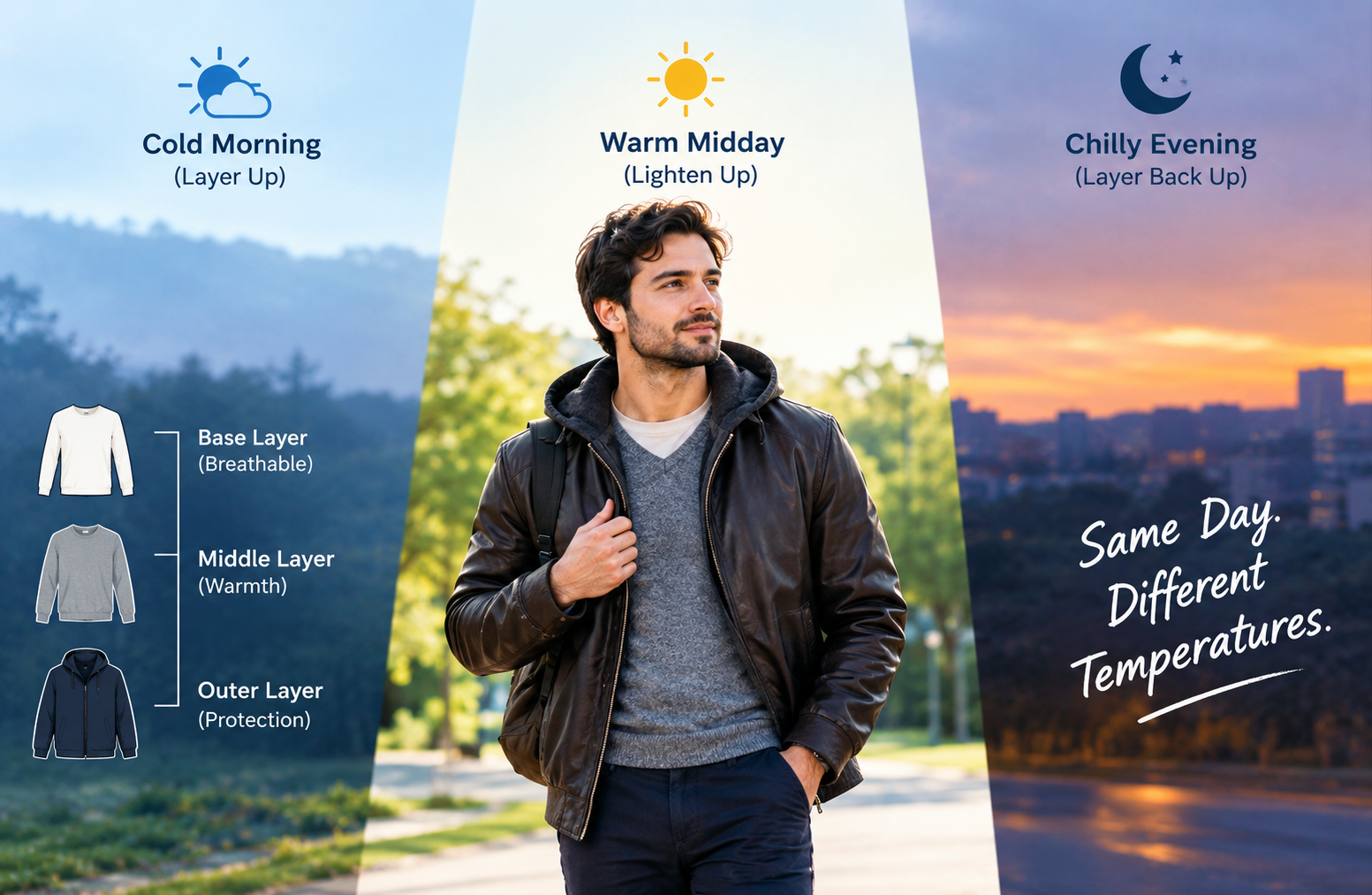
A cold morning walk, a warm midday sun, and a chilly evening breeze can all happen within the same twelve hours, and most wardrobes aren’t built to handle that kind of swing gracefully. You either end up sweating in a jacket that made sense at 8 a.m., or shivering by 7 p.m. because you left it at home.
This isn’t really a weather problem. It’s a planning problem. With the right approach to layering and a few flexible pieces, staying comfortable through a day of shifting temperatures doesn’t require carrying a bag full of options. It just requires thinking about clothing as a system that adjusts, rather than a single outfit chosen for one moment in the day. This article walks through how to build that system in a practical, low-effort way.
Why Single-Outfit Thinking Falls Apart
Most people get dressed based on how the weather feels at the exact moment they leave the house. That works fine if the temperature stays flat all day, but it rarely does. A jacket chosen for a cold morning often becomes a burden by early afternoon, while an outfit picked for a mild afternoon leaves you underdressed once the sun goes down.
The fix isn’t predicting the “average” temperature and dressing for that. It’s building an outfit with built-in flexibility, so small adjustments, removing a layer, adding a jacket, rolling up sleeves, can happen without needing to change clothes entirely.
The Three-Layer Approach, Simplified
Layering gets talked about a lot, but it’s often made more complicated than it needs to be. At its core, it comes down to three functional layers:
- Base layer: A breathable shirt or top that manages moisture and regulates temperature against the skin.
- Middle layer: Something that traps warmth without excess bulk, like a light sweater, flannel, or lightweight fleece.
- Outer layer: A jacket that protects against wind, temperature drops, or light rain, and can be removed or added as conditions shift.
The middle and outer layers are where most of the flexibility comes from. A base layer usually stays on all day, but the other two should be easy to adjust without disrupting the whole outfit.
Choosing an Outer Layer That Can Handle Both Ends of the Day
The outer layer does the most work in a day of shifting temperatures, since it’s the piece most likely to come on and off. A jacket that’s too heavy becomes uncomfortable by midday, while one that’s too light leaves you cold once the sun sets.
A few qualities make an outer layer genuinely useful across a full day:
- Enough structure to block wind without needing to be zipped all the way for warmth
- A cut roomy enough to layer over a sweater in the morning, but not so bulky it feels excessive once removed
- Materials that don’t trap heat excessively when worn over just a light shirt later in the day
Leather works well here because it insulates against wind and cold without the added bulk of heavier winter fabrics, while still being light enough to carry over an arm once the temperature climbs. For days that start cold and stay unpredictable, a leather jacket with hood adds a quick way to manage wind or a passing shower without needing to switch jackets entirely.
Fabrics That Adjust With You
Certain fabrics naturally handle temperature swings better than others, regardless of how they’re layered.
Cotton Blends
Lightweight cotton blends breathe well in warmer stretches of the day and still provide a bit of insulation once temperatures drop, making them a solid base or middle-layer choice.
Leather
Beyond outerwear, leather accessories and jackets hold heat efficiently without becoming stifling, which is part of why leather has remained a practical choice across seasons rather than just a cold-weather material. A well-maintained leather piece from a source like The Leather Coats can move between a cool morning and a mild afternoon without needing to be swapped for something lighter.
Merino Wool
Merino wool regulates temperature unusually well for its weight, staying warm in cooler moments while resisting the clammy feeling that heavier wool can cause once the day warms up. It’s a strong base-layer option for anyone dealing with wide daily temperature swings.
Small Adjustments That Make a Big Difference
Staying comfortable through a shifting day often comes down to small, easy actions rather than a complicated wardrobe overhaul:
- Rolling sleeves up or down as the temperature shifts
- Leaving an outer layer unzipped or loosely closed instead of fully sealed
- Carrying a light layer that folds small enough to fit in a bag rather than skipping it entirely
- Choosing accessories, like a light scarf, that can be added or removed without changing the whole outfit
None of these require planning far in advance. They just require choosing pieces at the start of the day that allow for those small changes.
Building a Wardrobe Around Flexibility
Over time, it helps to notice which pieces consistently perform well across a range of conditions and lean toward buying more of those, rather than pieces suited to only one narrow temperature range. A jacket that only works in genuinely cold weather gets far less use than one that handles a wider stretch of the year, which matters if the goal is a wardrobe built around fewer, more versatile pieces rather than a closet full of single-purpose items.
This lines up with what climate and comfort researchers often point out: the human body adjusts more easily to gradual layering changes than to switching between very different weights of clothing throughout the day. Building a rotation of moderate, adaptable pieces tends to keep people comfortable more consistently than relying on one heavy piece for cold moments and one light piece for warm ones.
FAQ
FAQ 1: What’s the easiest way to prepare for a day with big temperature swings? Dress in layers you can easily add or remove, starting with a breathable base layer, a light middle layer, and an outer layer that isn’t too heavy to carry once removed.
FAQ 2: Is leather a good choice for changing temperatures?
Yes. Leather insulates well against wind and cold without being overly heavy, which makes it easier to wear through a cool morning and still carry comfortably once the day warms up.
FAQ 3: How many layers do I actually need?
Three functional layers, a base, a middle, and an outer layer, are usually enough to handle most daily temperature shifts without overcomplicating the outfit.
FAQ 4: What fabrics handle temperature changes best?
Breathable cotton blends, merino wool, and leather all perform well across a range of conditions, since they regulate temperature more effectively than heavier, single-purpose fabrics.
FAQ 5: Should I just check the weather forecast and dress for the average temperature?
Not exactly. Dressing for flexibility, rather than a single average temperature, tends to work better since it allows small adjustments throughout the day instead of committing to one fixed outfit.
Conclusion
Staying comfortable through a day of shifting temperatures isn’t about predicting the weather perfectly. It’s about choosing clothing that can adjust as conditions change, rather than locking into one outfit for the whole day. A flexible layering approach, paired with an outer layer that works across a range of conditions, does more for comfort than chasing the “right” outfit for a single moment in time.