How Jacuzzi Bath Remodel Can Help With a Tub to Walk In Shower Conversion Request
Key Takeaways
- Jacuzzi Bath Remodel converts many existing bathtub areas into walk-in showers.
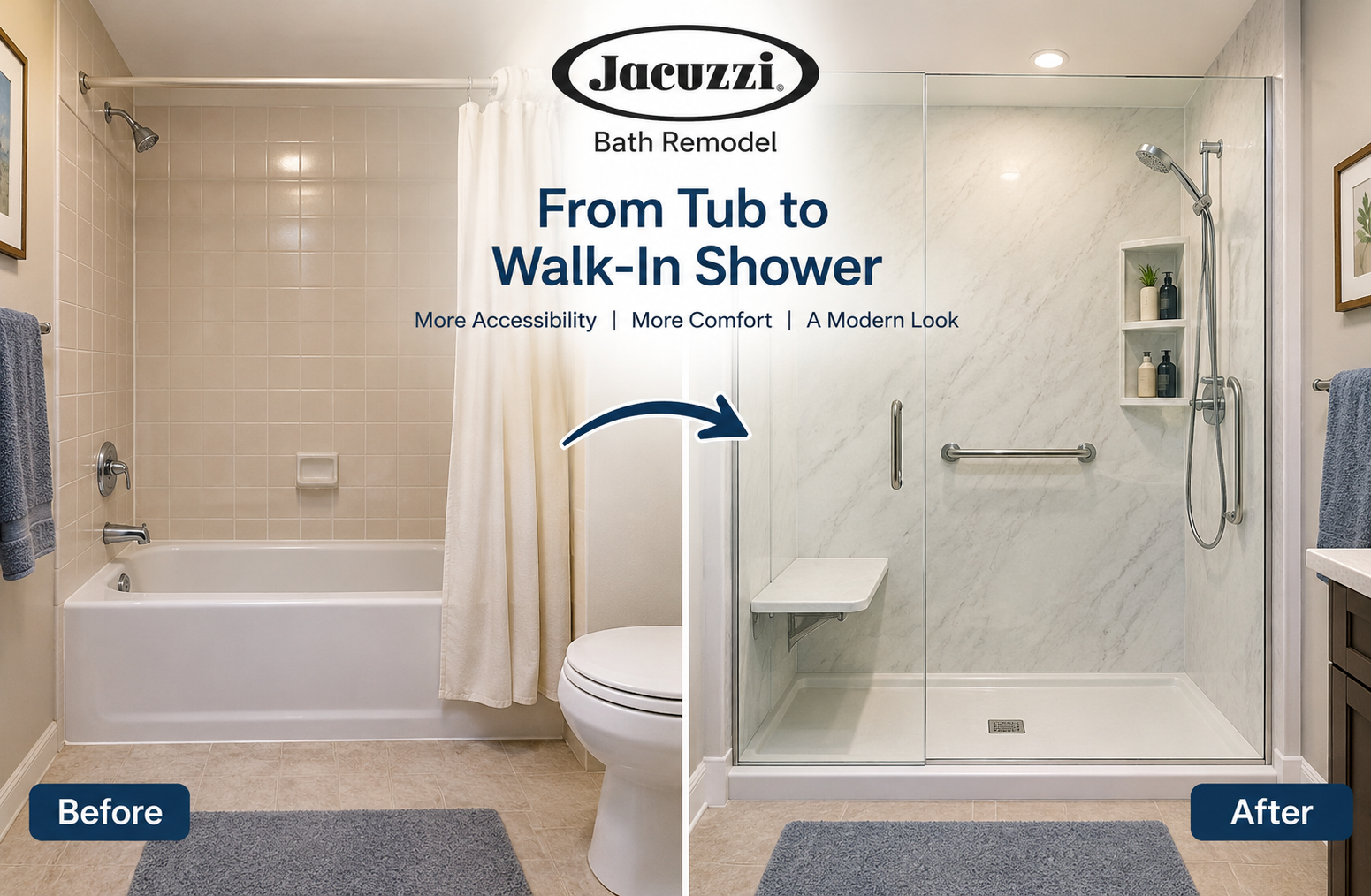
- Low-threshold entries, seating, grab bars, handheld showerheads, and slip-resistant bases can support a more accessible bathing space.
- Custom wall finishes, fixtures, and storage options allow the shower to fit practical and visual preferences.
- Many conversions are completed in as little as one day, although site conditions and project requirements can affect the timeline.
- A consultation is the right time to confirm design feasibility, installation details, pricing, and warranty terms.
A high tub wall, worn surfaces, and an unused bathtub can turn a daily routine into an ongoing inconvenience. For homeowners considering a tub to walk in shower conversion, Jacuzzi Bath Remodel offers a focused alternative to a complete bathroom overhaul.
The process centers on replacing the existing tub with a custom Jacuzzi® walk-in shower designed for the bathing area. It can be a practical option for households that want easier access, refreshed finishes, and features that better match how the bathroom is used today.
Why Replace a Tub With a Walk-In Shower?
Many homeowners begin a tub-to-walk-in shower conversion request because the tub no longer fits their routine. Some rarely take baths. Others find stepping over the tub wall difficult, want a more open bathing area, or are tired of maintaining old tile and grout.
Jacuzzi Bath Remodel specializes in the tub and shower area rather than a whole-room redesign. Its approach may allow the new shower to be installed in the same general footprint as the former tub, which can make sense when the existing bathroom layout already works well.
A walk-in shower is also a forward-looking choice for homeowners exploring universal design, which features home designs that work for people with a range of abilities, while still allowing the room to retain a modern appearance.
Accessibility and Safety Features to Consider
A shower conversion should be designed around the people who will use it. Accessibility features do not eliminate fall risk, but they may reduce common barriers to entering, exiting, and using a bathing area when chosen and installed appropriately.
Features to Review During a Consultation
- Low-threshold or no-threshold entry: Helps reduce the height a person must step over compared with a conventional tub wall.
- Grab bars: Can provide a handhold when entering, exiting, standing, or changing position. Placement should reflect the user’s reach and movement pattern.
- Built-in or fold-down seating: Offers a seated bathing option for comfort, fatigue, balance concerns, or personal preference.
- Handheld showerheads: Can make it easier to direct water while standing or seated.
- Slip-resistant flooring: Provides a surface designed for wet-area traction.
Customization Options for a Jacuzzi® Shower
A practical shower does not need to look generic. Jacuzzi Bath Remodel offers shower systems with wall colors, patterns, and textures, as well as fixture choices, rain showerheads, handheld options, storage, seating, and hardware.
For example, a homeowner planning to age in place may prioritize a low-entry, fold-down seat, handheld showerhead, and strategically placed grab bars. Someone focused on appearance may prefer textured wall panels, built-in shelving, and minimal enclosure hardware. The consultation helps turn those priorities into a design that fits the room.
Cleaning and Maintenance Considerations
Traditional tile showers can require attention to grout lines, especially where moisture and soap residue collect. Jacuzzi Bath Remodel uses grout-free, nonporous Tri-Tek™ acrylic wall systems. The company states that these walls are infused with silver ions and designed to resist mold, mildew, bacteria, and stains.
That can simplify routine upkeep, but no shower is maintenance-free. Homeowners should use the recommended cleaning methods, maintain bathroom ventilation, and ask for written care guidance after installation. Water quality, product residue, and household use can all affect how often a shower needs cleaning.
What to Expect During the Conversion Process
- In-home consultation: A local representative evaluates the bathing area, takes measurements, and discusses goals, style preferences, and access needs.
- Feature selection: The homeowner chooses wall panels, fixtures, storage, seating, shower base options, and other upgrades.
- Project quote: Pricing reflects the selected system, customization, location, and installation requirements.
- Installation preparation: The shower system is prepared for the measured space, and the installation plan is reviewed.
- Tub removal and shower installation: The existing tub is removed, and the new shower is installed in the planned area.
- Final walkthrough: The completed work, care needs, and applicable warranty information are reviewed.
Many Jacuzzi Bath Remodel conversions can be completed in as little as one day. However, plumbing repairs, hidden damage, structural concerns, permits, and other unforeseen conditions can extend the schedule.
Conversion Versus a Full Bathroom Renovation
A tub-to-shower conversion is usually best for homeowners whose main concern is the bathing area. It focuses on improving access, function, style, and maintenance without necessarily changing the rest of the room.
- Choose a Jacuzzi Bath Remodel conversion when the current bathroom layout works, but the bathtub does not.
- Consider a full renovation when the project involves moving walls, relocating the toilet or vanity, replacing all flooring, or redesigning the entire room.
- Review the scope carefully because a focused shower conversion and a whole-bath remodel involve different timelines, trades, and costs.
Questions to Ask Before Requesting a Quote
- Can the selected shower fit within the existing tub footprint?
- Will the current drain and water supply locations work with the design?
- Which entry height, seating option, and grab bar placement best fit the household?
- What materials, labor, removal work, and finishing details are included in the quote?
- Could permits, plumbing repairs, or hidden site conditions affect pricing or timing?
- What maintenance steps and warranty terms apply to the completed shower?
Frequently Asked Questions
How much does a Jacuzzi Bath Remodel tub-to-shower conversion cost?
Costs vary based on the shower model, selected features, local market, and installation conditions. A personalized in-home consultation is the most reliable way to receive project-specific pricing.
Can any bathtub be converted into a walk-in shower?
Many tubs can be replaced with a shower in the same general space, but the bathroom’s measurements, plumbing, access, and condition must be evaluated first.
Will removing a bathtub affect resale value?
It depends on the home, the local buyer’s preferences, and whether another bathroom has a bathtub. Homeowners who want to preserve flexibility may prefer to keep at least one tub elsewhere in the home.
How do I begin a tub-to-walk-in shower conversion request?
Start with a Jacuzzi Bath Remodel in-home consultation. It provides an opportunity to assess the space, compare design options, discuss accessibility priorities, and receive a detailed quote before work begins.
Conclusion
A tub-to-shower conversion can create a more accessible and practical bathing space without requiring a complete bathroom renovation. Careful planning around entry, safety features, materials, storage, maintenance, and budget can help homeowners choose an appropriate design. A professional consultation can clarify the project’s feasibility, expected costs, installation timeline, and warranty details.