How Abdominal Skin Changes After Weight Loss
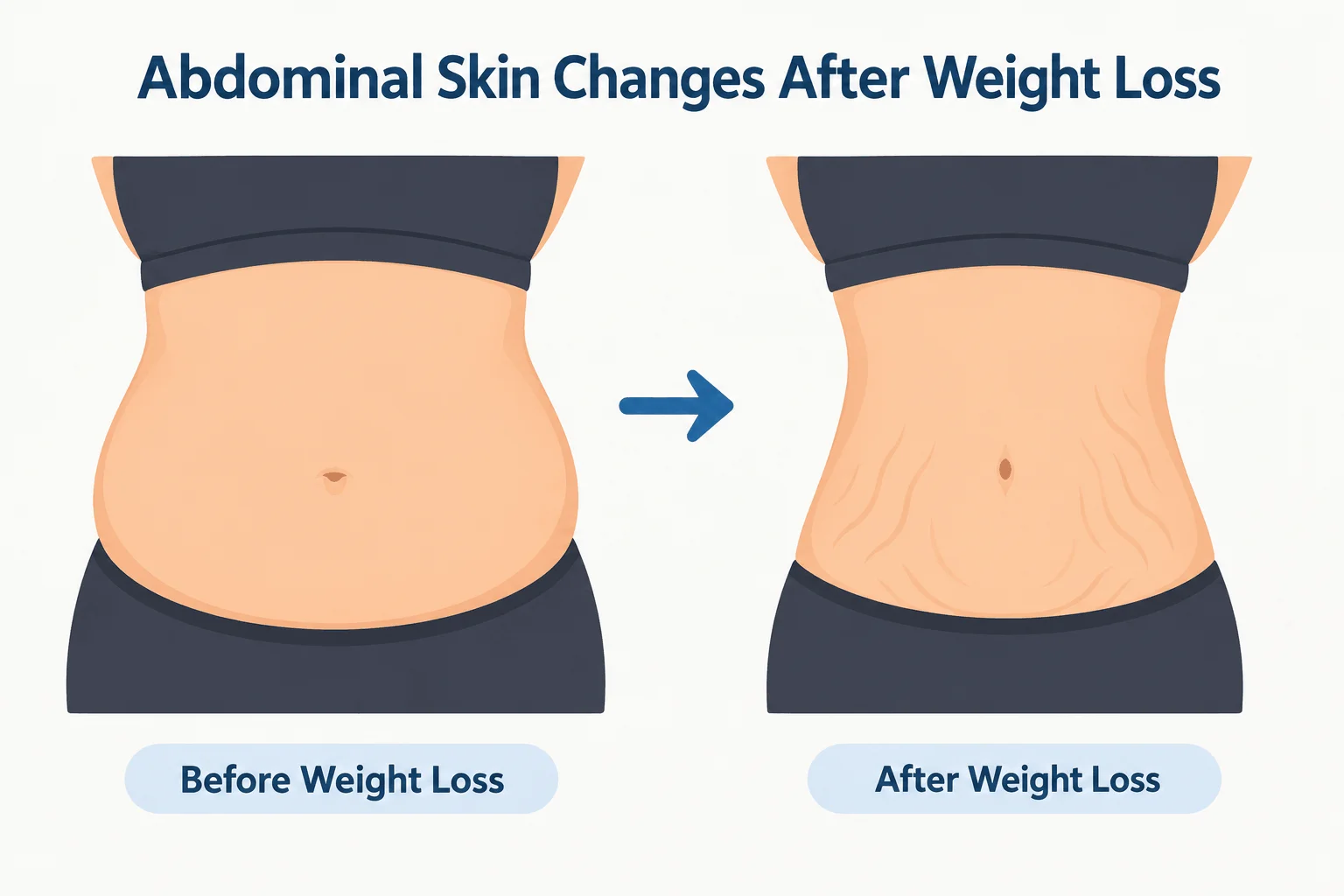
The scale stops at the number. The mirror keeps arguing. That is the stage plenty of people reach eighteen months into a serious weight loss, down sixty or eighty pounds, healthier by every blood test, and still tugging at a fold of abdominal skin that refuses to follow the rest of the body.
It is not a failure of discipline. It is tissue mechanics, and the biology behind it is reasonably well understood. Skin stretched hard for years does not fully recover, and the abdomen is where that shows most, because it carried the most.
Understanding what actually changed makes the next decision easier. Some people need nothing. Some need a small revision low on the abdomen. Some need a full reconstruction of the abdominal wall. Those are genuinely different operations, and the difference comes down to what the tissue is doing.
What Happens Inside Stretched Skin
Skin holds its shape through collagen and elastin, two protein networks that work like scaffolding and elastic bands. When the abdomen expands quickly, through pregnancy or substantial weight gain, those fibers stretch past what they can recover from. The American Academy of Dermatology describes stretch marks as scars left behind when skin changes size fast enough to rupture collagen and elastin, which is the visible version of a process that also happens invisibly across the whole abdominal wall.
Age compounds it. Collagen production slows, skin thins, and recovery capacity drops with every decade. So does the duration of the stretch; skin held taut for fifteen years behaves differently from skin stretched for two. Genetics sets the baseline nobody chooses.
Loose Skin, Residual Fat, and Separated Muscle
Three separate problems get lumped together under one complaint. Loose skin is an envelope issue, and no amount of training shrinks an envelope. Residual fat sits under the skin and responds to liposuction. Diastasis recti, where the abdominal muscles separate down the midline, is a structural problem that creates a bulge no diet reaches.
Most post-weight-loss abdomens present some combination of all three. A surgeon sorts them by examining the patient standing and lying down, pinching tissue, and asking the patient to engage their core. The sorting determines everything that follows, which is why a diagnosis from a photograph is worth very little.
Why Weight Has to Settle First
Surgeons want a stable weight before contouring, usually six to twelve months of it. The reason is simple. Removing skin from a body that is still shrinking leaves laxity behind, and removing skin from a body that is about to regain leaves tension where there should be none.
Bariatric patients get the strictest version of this advice, and the data explains why. The American Society for Metabolic and Bariatric Surgery reports that roughly 90 percent of patients lose half their excess body weight and keep it off long term, with most of that loss concentrated in the first twelve to eighteen months. Contouring belongs after that curve flattens, not during it.
Nutrition matters too, and it is easy to overlook. Protein intake, iron, B12, and vitamin D all affect wound healing, and deficiencies are common after malabsorptive procedures. The National Institute of Diabetes and Digestive and Kidney Diseases is direct about the follow-up and supplementation these operations require. A surgeon who orders bloodwork before contouring is doing the job properly.
Matching the Procedure to the Problem
A full abdominoplasty addresses skin, fat, and muscle separation together, with an incision running hip to hip and the navel repositioned. It handles the most tissue and asks the most of recovery. A limited version suits a narrower problem: laxity confined below the navel, no significant muscle separation, and no excess above. Patients researching a mini tummy tuck Toronto option are usually looking at this category, though only an exam confirms whether they fit it.
Then there are the larger reconstructions. A fleur-de-lis pattern adds a vertical incision for patients with horizontal looseness after very large weight loss. A lower body lift extends around the torso to address flanks and buttocks at once. More correction means more scar, every time, and that trade is the central conversation of the consultation.
Walking Into the Consultation Prepared
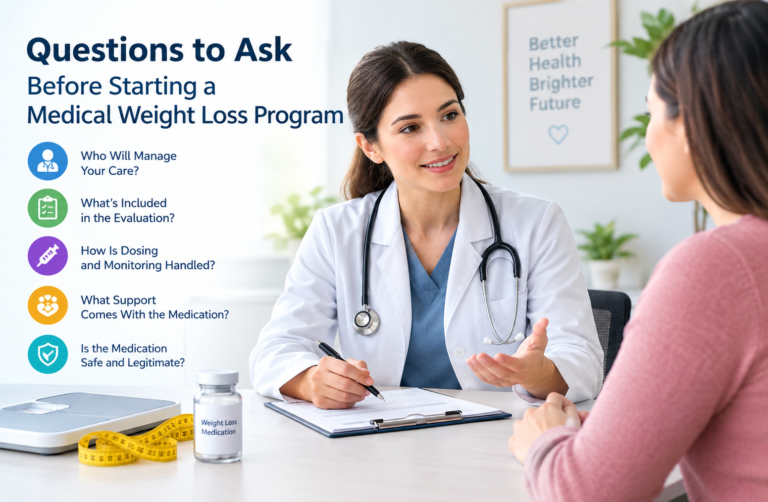
Bring history. Starting weight, current weight, how long it has held, pregnancies, prior abdominal surgery, medications, and whether you smoke. Every one of those changes the plan or the risk, and surgeons would rather hear it in the first visit than discover it in the operating room.
Ask where the scar will sit relative to your clothing. Ask about drains, compression, and how many weeks before you can lift a child. Ask what the revision policy is. Vague answers are information. Learning to read health information critically helps here too, since much of what circulates online about recovery timelines is written to sell rather than inform.
Where That Leaves You
Abdominal skin after major weight loss is a record of what the body went through. It does not retract on command, and treating it as a motivation problem only delays a reasonable decision.
Some people live with it comfortably and never see a surgeon, which is a perfectly good outcome. Others find that the skin causes rashes in the folds, interferes with exercise, or simply keeps the weight loss from feeling finished. Both responses are legitimate, and neither needs defending.
If the second description fits, the useful next step is an exam with a certified plastic surgeon who does body contouring regularly. Go with your history written down and your questions in hand. The right procedure is whichever one matches the tissue in front of the surgeon, and that cannot be decided from a search result.