Fanisco: Meaning, Uses, and What the Term Really Refers To
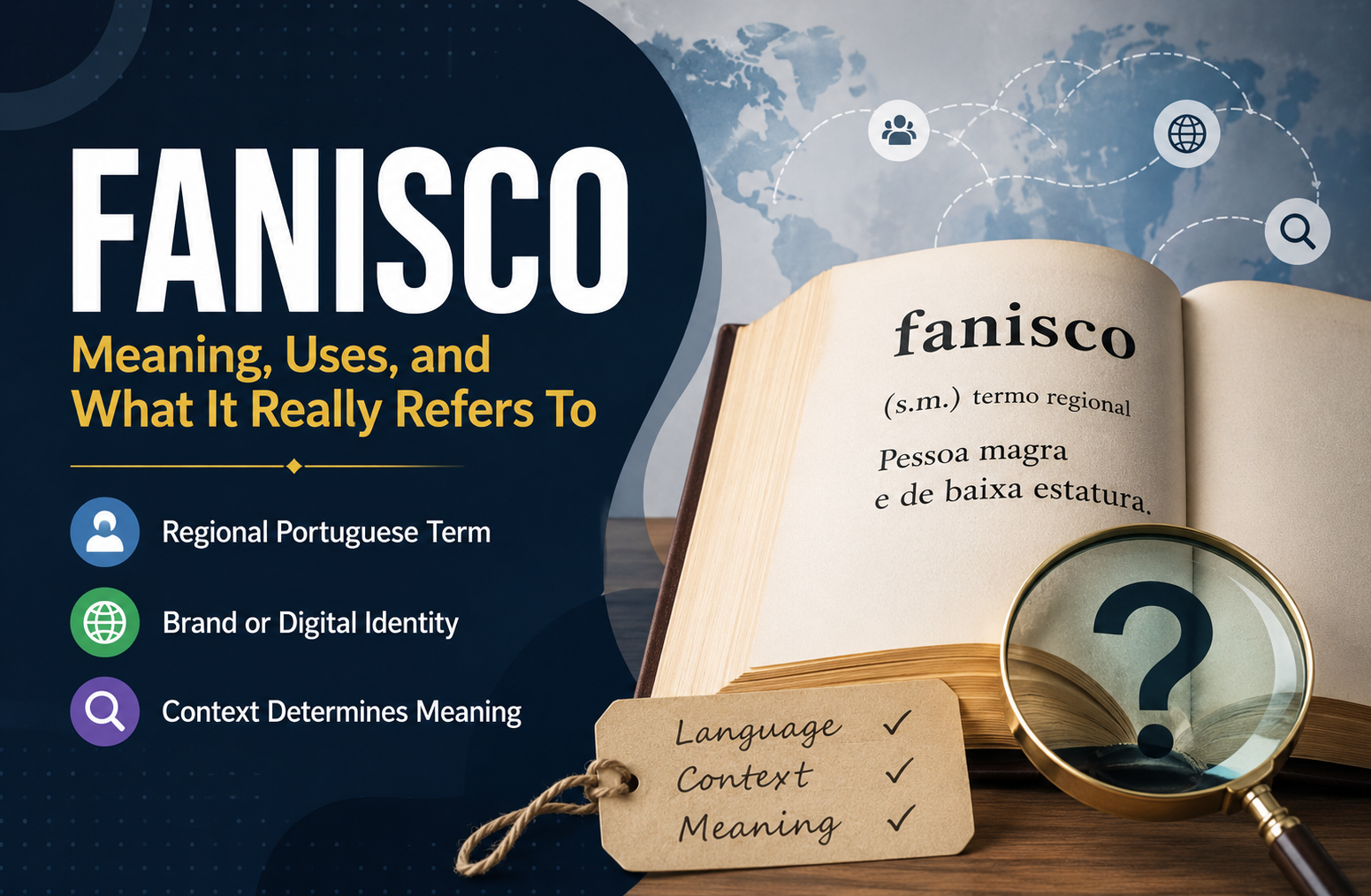
If you searched for fanisco, you may have found several different explanations online. Some pages describe it as a modern digital term or brand name, while established Portuguese dictionaries record it as a regional word referring to a person who is thin and short. The most accurate answer is that the meaning depends heavily on context.
This matters because many online articles treat the term as if it has one universal definition. The available evidence suggests otherwise. A word can have a documented regional meaning while also being used independently as a business name, online identifier, or creative label.
This guide separates confirmed information from speculation. Rather than repeating unsupported claims, it explains what can reasonably be verified, where confusion comes from, and how to understand the word when you encounter it online.
What Is Fanisco?
The clearest answer is that fanisco does not have one single meaning that applies in every situation.
In Portuguese-language dictionaries, the term is recorded as a regional noun associated with a person who is thin and of short stature. For example, the Michaelis dictionary identifies it as a regional term from Rio Grande do Sul, Brazil, while Dicio describes it as referring to someone who is very thin and of small stature. The exact etymology is listed as unclear or controversial.
However, the same spelling also appears online in other contexts. It may be used as:
- A business or brand name
- A digital identifier
- A username or creative alias
- A project name
- A search term that has attracted curiosity because of its unusual appearance
These uses should not automatically be treated as parts of one shared definition. An important lesson when researching unfamiliar terms is that identical spellings can represent different ideas, people, businesses, or linguistic uses.
A Simple Way to Understand the Term
The best approach is to ask one question first:
Where did you encounter the word?
If you saw it in a Portuguese conversation, the regional linguistic meaning may be relevant. If you saw it beside a company, product, website, or profile, it may simply be a name. And if you found it in an online article discussing branding or digital identity, the author may be using it as a flexible modern label.
Context is more reliable than guessing based on the sound of the word.
The Documented Portuguese Meaning
The strongest verifiable explanation comes from Portuguese dictionary sources.
The term is listed as a masculine noun associated with a person who is thin and short. One dictionary specifically marks the usage as regional, which is important. Regional vocabulary can be well known in one area while remaining unfamiliar in another part of the same country.
This means a person who speaks Portuguese may not necessarily recognize the word. Language is full of regional variation.
For English readers, the closest broad interpretation would be something like:
A thin, small, or short person
However, no single English word captures every possible regional or cultural nuance. Informal expressions often carry tones and associations that disappear when translated word for word.
Why Regional Context Matters
A common mistake in online content is to find one definition and present it as universal.
That approach can be misleading.
Brazil alone has major regional differences in vocabulary, pronunciation, and informal expressions. A word commonly understood in one state may sound unfamiliar elsewhere. For that reason, saying that the term has one universal meaning across every Portuguese-speaking community would go beyond the available evidence.
A better explanation is that the word has a documented regional Portuguese usage connected with describing someone as thin and short.
Is Fanisco a Dictionary Word?
Yes, there is evidence that the word appears in Portuguese dictionaries.
The more precise question is not whether it is a “real word.” It is better to ask:
Is it a widely used international word with one fixed meaning?
The answer appears to be no.
The word is documented in regional Portuguese usage, but that does not mean every modern use of the same spelling comes from that linguistic meaning.
Words can exist in several ways at once.
For example, a word may be:
- A dictionary entry in one language
- A surname in another context
- A business name
- A username
- A product name
- A coined brand identity
The same principle can apply here.
This distinction is especially useful because search results sometimes mix linguistic definitions with modern branding claims. Those are separate categories of information and should be evaluated separately.
Why Does the Same Term Have Different Meanings Online?
The internet makes it easy for unusual words to appear in many unrelated places.
Imagine someone chooses a distinctive name for:
- A startup
- A blog
- A social profile
- A creative project
- A digital product
- A business
Later, people searching for that name may encounter both the new project and the older dictionary meaning.
Search engines then collect pages about both topics under the same search query. To the user, it may appear that the word has dozens of connected meanings when the reality is much simpler: different people may be using the same spelling independently.
This is one reason unfamiliar search terms require careful research.
Repetition Is Not Proof
Another important issue is the repetition of claims online.
If ten websites repeat that a word represents “innovation, transformation, creativity, and digital growth,” that does not automatically establish those ideas as its official meaning.
The same information may have been copied, rewritten, or generated from earlier pages without an authoritative source.
A reliable research process should therefore ask:
- Where did the claim originate?
- Is there a primary source?
- Is the meaning documented in a recognized dictionary?
- Is there an identifiable organization behind the claimed brand or platform?
- Are multiple websites independently confirming the information?
This approach is especially important for unusual or emerging keywords.
Fanisco as a Name or Brand
Outside its documented linguistic usage, the word can function as a distinctive name.
A name does not need to have a dictionary definition to become meaningful. Its meaning can develop through use.
Think about how a business or project builds an identity. Over time, people begin associating the name with:
- Products
- Services
- Reputation
- Design
- Community
- Values
- Experiences
The word itself may begin with little or no widely recognized meaning. The organization gives it meaning through consistent use.
This is why unique names can be attractive for branding.
Why Uncommon Names Can Work
A distinctive name can offer several practical advantages:
- It may be easier to remember
- It may stand out in a crowded market
- It can develop its own identity
- It may avoid generic descriptions
- It gives creators flexibility in defining their message
But uniqueness alone does not make a brand successful.
A name still needs:
- Clear positioning
- A trustworthy website
- Consistent communication
- Good user experience
- A recognizable identity
- Legal and trademark checks before commercial use
The final point is particularly important. Finding an unusual word online does not mean it is automatically available for commercial use.
Can the Term Be Used for Digital Identity?
Potentially, yes.
An uncommon word can work as a username, project title, community name, or digital identity because it does not immediately limit the person or project to one category.
For example, a highly descriptive name may clearly explain what a business does, while a distinctive coined name can become associated with a business over time.
There is a trade-off.
Descriptive Names
Advantages:
- Easy to understand immediately
- Clear connection to a product or service
- Often easier for new customers to interpret
Challenges:
- May sound generic
- Can be difficult to differentiate
- May face greater naming competition
Distinctive Names
Advantages:
- Can feel memorable
- May create a stronger independent identity
- Can expand into different categories
- Often provide more creative flexibility
Challenges:
- Require more effort to explain
- Meaning must be built over time
- Users may initially search for clarification
- Availability and trademark status must still be checked
A name like this can therefore function as a flexible digital identifier, but that does not mean the word itself has an officially established technological definition.
Common Misunderstandings
Several misunderstandings can make research into unusual keywords more confusing than necessary.
Misunderstanding 1: Every Online Explanation Is Connected
This is not necessarily true.
A dictionary meaning, a company name, and a creative project can share the same spelling without sharing a common origin.
Misunderstanding 2: A Repeated Claim Becomes a Fact
Not always.
Online repetition can create an appearance of authority even when many pages rely on the same unsupported idea.
Misunderstanding 3: An Unusual Word Must Be Newly Invented
Also not necessarily true.
A term can have a long-standing regional meaning while still being unfamiliar to international audiences.
Misunderstanding 4: One Definition Must Be the Only Correct One
Context can support different meanings.
The key is not forcing all uses into one definition. Instead, identify which meaning applies in the situation being discussed.
How to Identify the Correct Meaning
If you encounter the term and are unsure what it means, use this simple process.
Step 1: Look at the Surrounding Context
Read the words around it.
- If the discussion involves Portuguese language or regional vocabulary, the dictionary meaning may be relevant.
- If the discussion involves a website, company, service, or product, investigate that specific entity.
- If the word appears as a username, it may simply be an individual’s chosen online identity.
Step 2: Find the Original Source
Do not rely only on articles summarizing other articles.
Look for:
- Official company information
- Verified business records
- Established dictionaries
- Primary documents
- Reputable institutional sources
The closer you get to the original source, the easier it is to separate evidence from speculation.
Step 3: Check Whether Claims Are Specific
Vague statements deserve extra caution.
For example, a claim that a term is “revolutionizing digital innovation worldwide” provides little useful information unless it identifies:
- Who is behind it
- What product exists
- How it works
- Who uses it
- What evidence supports the claim
Specific evidence is more valuable than impressive language.
Step 4: Separate Language From Branding
This is one of the most useful distinctions.
A word can have a dictionary meaning and also become a brand name. The existence of one does not automatically explain the other.
Step 5: Avoid Making Unsupported Assumptions
- If the origin is unclear, say it is unclear.
- If a platform has no identifiable official source, do not invent its features.
- If a claimed definition appears only on low-authority websites, treat it as an interpretation rather than established fact.
This method produces more trustworthy research than simply selecting the most popular explanation.
What Real-World Applications Can the Name Have?
As a distinctive identifier, the word could theoretically be used in many different settings.
Business Branding
A business might choose an unusual name to create a memorable identity.
The actual meaning would then depend on the company’s products, services, and brand story.
Creative Projects
Artists, writers, designers, and creators often use unusual names because they allow a project to develop its own personality.
Online Communities
A distinctive term can become the name of a group or community.
Over time, members may give the name meaning through shared culture and repeated use.
Usernames and Aliases
People often choose uncommon words as online handles because they can be easier to distinguish from generic usernames.
Experimental Digital Projects
Developers and creators sometimes use temporary or experimental names before establishing a permanent brand.
In all of these cases, the spelling functions as an identifier. Its meaning comes from the people and projects connected to it.
Challenges When Researching Emerging or Unfamiliar Terms
One of the biggest challenges is information quality.
When a keyword has limited authoritative information, content creators may feel pressure to provide a complete story. That can lead to unsupported explanations.
Information Scarcity
Few reliable sources can create a temptation to fill gaps with assumptions.
A trustworthy article should do the opposite. It should clearly distinguish between:
- Confirmed information
- Reasonable interpretation
- Unverified claims
- Unknown details
Conflicting Search Results
Different websites may provide completely different definitions.
This does not necessarily mean one is intentionally false. They may simply be discussing different uses of the same word.
Weak Source Attribution
Some pages make claims without explaining where the information came from.
When there is no identifiable source, readers should remain cautious.
Context Collapse
Search engines place unrelated uses of the same word beside each other. A linguistic term, business name, and digital project can therefore appear in the same results page.
The solution is context, not guesswork.
A Practical Research Checklist
When investigating a term like this, use the following checklist:
- Identify where you encountered it
- Check established dictionaries
- Search for official organizations using the name
- Look for primary sources
- Compare multiple independent sources
- Check publication dates
- Avoid assuming that repeated claims are verified
- Separate historical facts from modern interpretations
- Treat unclear origins honestly
- Consider regional language differences
This process is useful far beyond one search term.
It can help with:
- New brands
- Viral expressions
- Internet slang
- Startup names
- Emerging technologies
- Online communities
- Unusual product names
My Perspective on Researching Ambiguous Search Terms
From an editorial and research perspective, one of the clearest lessons is that ambiguity should not be hidden.
When writers encounter an unusual keyword, there is often a temptation to produce a neat and dramatic explanation. But the evidence may point to something more complicated.
The most useful answer is sometimes:
The term does not have one universal meaning, and the context determines what it refers to.
That may sound less dramatic, but it is more helpful.
Good informational content should reduce confusion rather than replace one uncertainty with a confident but unsupported story.
For this reason, the strongest way to approach this topic is to recognize the documented regional linguistic meaning while also acknowledging that the same spelling can be adopted independently as a name, label, or digital identifier.
How Businesses and Writers Should Use the Term Carefully
If you plan to use the word in content, branding, or research, clarity matters.
For Writers
Explain the context early.
Do not assume readers know whether you mean:
- The Portuguese word
- A business
- A person or username
- A creative project
- A digital label
For Businesses
Research the name before commercial use.
Check:
- Existing companies
- Trademarks
- Domain availability
- Social media usernames
- Regional meanings
- Possible negative associations
For Content Publishers
Avoid publishing invented technical details.
If no verified evidence confirms that the name belongs to a specific software platform or service, do not describe features such as automation, analytics, cloud infrastructure, or artificial intelligence as established facts.
Specific claims require specific evidence.
Why Context Is the Most Important Answer
The central lesson is simple.
The same spelling can travel through language, geography, culture, and the internet in unexpected ways.
A dictionary may document one regional meaning. A business may use the same word as its name. An online creator may independently select it as an identity.
Trying to force all of these uses into one explanation creates confusion.
Context solves most of the problem.
When researching an unfamiliar word, ask:
Who is using it?
Where is it being used?
What is being discussed around it?
What evidence supports the claimed meaning?
Those questions are often more useful than searching for a single universal definition.
Frequently Asked Questions
What does Fanisco mean?
The term has a documented regional meaning in Portuguese dictionaries referring to a person who is thin and of short stature. It may also appear independently as a name, brand, username, or digital identifier depending on context.
Is Fanisco a real word?
Yes. It appears in Portuguese dictionary sources as a regional word, although its usage and recognition may vary by location.
What does Fanisco mean in Portuguese?
Dictionary sources describe it as a regional term associated with someone who is thin and short. The precise usage can vary depending on regional context.
Is Fanisco the name of a digital platform?
Some online pages make claims about digital uses of the name, but a name alone should not be treated as proof of a specific platform or set of features. Verify any claimed service through an identifiable official source.
Why are there different meanings online?
Different people and organizations can use the same spelling independently. Search results may combine a regional dictionary meaning with unrelated brands, usernames, businesses, or creative projects.
What should I do if I encounter this term online?
Check the surrounding context and identify the original source. A Portuguese-language conversation may refer to the regional word, while a website or profile may be using the term as a name.
Conclusion
Fanisco is best understood through context rather than through one universal definition. The available dictionary evidence supports a regional Portuguese usage referring to a thin and short person, while the same spelling can also appear independently as a brand name, online identifier, username, or creative label.
The most important point is to avoid combining unrelated claims into one invented history. When researching unfamiliar words, reliable sources, regional context, and primary evidence matter more than repeated online explanations.
A careful approach produces a clearer answer: identify where the term appears, determine who is using it, and verify the meaning within that specific context.