The Evolution of Online Gaming: How Multiplayer Games Have Changed Over Time
Imagine playing a video game with a friend who lives in another country. You can talk, work together, and compete in real time without leaving your home. Today, this feels normal. But online gaming was not always this easy.
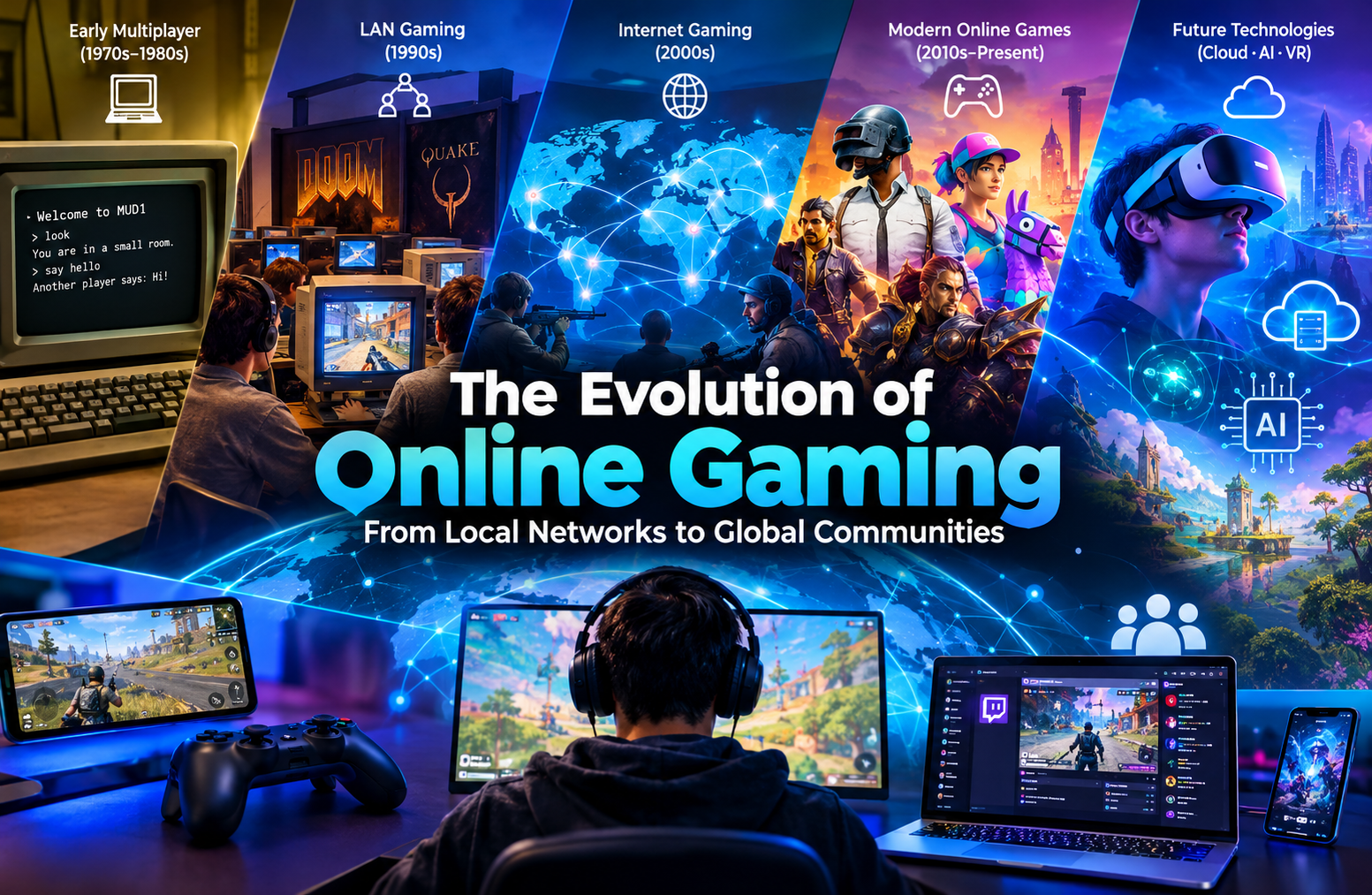
The evolution of online gaming has changed how people play, connect, and enjoy video games. What started with simple computer connections has grown into a worldwide activity where millions of players can meet inside virtual worlds.
From early multiplayer games to modern online platforms, gaming has become faster, more social, and more exciting. Let’s explore how online multiplayer games have changed over time and what makes them so popular today.
The Early Days of Online Gaming
Online gaming began long before fast internet and modern gaming consoles became common. Early computer users found ways to connect their systems and play simple games together.
These games had basic graphics, simple controls, and limited features. However, they introduced an exciting idea: people could play with others without sitting in the same room.
The First Multiplayer Computer Games
In the early days, multiplayer gaming often took place through university computer networks and research systems. Some games allowed users to interact in shared virtual spaces, while others focused on simple competition.
One early example was MUD1, created in 1978. It was a text-based multiplayer game where players explored a virtual world, completed tasks, and interacted with other users.
There were no realistic graphics or detailed character animations. Players mainly used text commands to explore and communicate.
Even with these limits, early multiplayer games helped shape the online gaming experiences we enjoy today.
The Rise of Local Network Gaming
As personal computers became more common, local area network (LAN) gaming grew in popularity.
A LAN connects computers within a limited area, such as a home, school, or gaming center. Players could connect their computers and compete in the same game.
Games like Doom and Quake helped make multiplayer computer gaming popular during the 1990s.
Friends often brought their computers to gaming events or visited internet cafes to play together. These sessions created strong gaming communities long before modern online services became widely available.
How the Internet Changed Multiplayer Games
The growth of the internet was one of the biggest turning points in online gaming history.
Before widespread internet access, players often needed to be in the same location or use special connections. As internet services improved, people could join multiplayer games from different homes and countries.
Playing With People Around the World
Internet connections made it possible to find opponents and teammates outside your local area.
Instead of inviting a friend over, you could join an online match and play with someone thousands of miles away.
This change helped multiplayer games reach larger audiences. It also allowed players to build friendships with people who shared their interests.
Online communities started growing around favorite games, teams, and gaming styles.
The Growth of Online Gaming Services
Gaming services made joining online matches easier. Players could create accounts, find other users, join servers, and communicate during games.
Console services such as Xbox Live, launched in 2002, helped bring online multiplayer gaming to a wider console audience.
These services also introduced features such as friends lists, voice chat, online rankings, and digital game content.
As a result, online gaming became more than simply playing a match. It became a place where people could meet, compete, and stay connected.
The Rise of Modern Online Multiplayer Games
As computers, consoles, and internet connections improved, multiplayer games became more detailed and offered more ways to play.
Developers began creating larger worlds, deeper stories, and new multiplayer experiences.
Massive Multiplayer Online Games
Massively multiplayer online games, often called MMOs, allow large numbers of players to share a virtual world.
One famous example is World of Warcraft, released in 2004. Players can explore different areas, complete quests, join groups, and fight powerful enemies together.
These games give players reasons to return over time. They may improve their characters, collect rare items, join guilds, or take part in special events.
Unlike a short multiplayer match, an MMO can feel like a world that continues to change while its community grows.
Competitive Online Gaming
Competitive multiplayer games also became a major part of gaming culture.
Games such as Counter-Strike and League of Legends encourage players to develop skills, understand game rules, and work with teammates.
Players compete in ranked matches and try to improve their performance. Some also take part in organized tournaments.
This growth helped esports become a recognized form of competitive entertainment, with professional players, teams, sponsors, and large audiences.
The Popularity of Battle Royale Games
Battle royale games introduced another popular multiplayer style.
In these games, many players enter a large map and compete until one player or team remains. The playable area often becomes smaller, forcing players into closer encounters.
PUBG: Battlegrounds and Fortnite helped bring this format to a huge audience.
Battle royale games combine survival, exploration, quick decisions, and teamwork. Since each match can unfold differently, players often face new challenges every time they play.
How Mobile Gaming Changed Online Multiplayer
Smartphones have made online gaming available to more people than ever before.
In the past, players often needed a gaming computer or console to enjoy detailed multiplayer experiences. Today, many people can join online matches using a phone and an internet connection.
Gaming Anytime and Anywhere
Mobile games allow players to enjoy short matches while traveling, relaxing at home, or spending time with friends.
Games such as PUBG Mobile and Call of Duty: Mobile offer online multiplayer features on smartphones.
Many mobile games are free to start, which can make them easier to try. However, some include optional purchases, advertisements, or paid items.
Mobile gaming has also helped players in regions with limited access to expensive gaming hardware join online communities.
Cross-Platform Multiplayer
Another important change is cross-platform gaming.
Cross-platform play allows people using different supported devices to play together. For example, someone on a console may be able to join a friend playing on a computer.
Games such as Fortnite support cross-platform play across several devices.
This feature makes it easier for friends to play together, even when they own different gaming systems. However, support depends on the game and the platforms involved.
The Role of Streaming and Gaming Communities
Online gaming is no longer limited to the people holding the controllers. Millions of people also watch others play through streaming platforms and gaming videos.
Live Streaming and Gaming Videos
Platforms such as Twitch and YouTube Gaming allow players to share live matches, guides, reviews, and funny moments.
Viewers can learn new strategies, discover games, and interact with streamers and other fans.
For some creators, gaming content has also become a way to build an audience and earn money. However, success as a gaming creator usually takes time, effort, and consistent content.
Online Communities and Friendships
Modern multiplayer games often include chat systems, groups, clans, and community events.
Players can join people with similar interests, practice together, and share their achievements.
These communities can make gaming more enjoyable and help people feel connected. At the same time, players should protect their personal information and report harassment or unsafe behavior.
Gaming is most enjoyable when players treat one another with respect.
New Technologies Shaping the Future of Online Gaming
Online gaming continues to change as technology improves. Several developments may shape how multiplayer games look and feel in the coming years.
Cloud Gaming
Cloud gaming lets players stream games from remote computers instead of running everything on their own devices.
This may allow people with less powerful hardware to enjoy games that would otherwise require a gaming PC or console.
However, cloud gaming depends on a stable internet connection, and performance can vary with connection speed and service availability.
Artificial Intelligence in Games
Artificial intelligence (AI) can help developers create more responsive characters, improve certain game systems, and support the creation of game content.
For example, smarter computer-controlled characters may react differently to player actions.
AI tools may also help developers test game systems and improve player experiences. The results depend on how these tools are designed and used.
Virtual Reality and More Immersive Experiences
Virtual reality (VR) allows players to enter computer-generated environments using special headsets and controls.
In multiplayer VR games, players can interact in shared virtual spaces, move around, and communicate in ways that feel different from traditional screen-based gaming.
Although VR equipment can be expensive and some players experience discomfort, the technology offers new ways to explore online worlds.
As hardware and software improve, multiplayer gaming may become even more interactive.
What Makes Online Gaming So Popular Today?
Online multiplayer games offer several reasons for people to keep playing.
- Social connection:Players can spend time with friends and meet people who share their interests.
- Competition:Ranked matches and tournaments give players goals to work toward.
- Teamwork:Many games reward communication and cooperation.
- Constant updates:New maps, characters, and events can keep games fresh.
- Easy access:Computers, consoles, and smartphones offer different ways to play.
Gaming platforms such as NEWGAMESZONE also reflect the interest players have in discovering games and exploring different gaming experiences.
However, it is important to balance gaming with sleep, exercise, school, work, and other daily activities. Healthy gaming habits help players enjoy their favorite games without missing out on other parts of life.
Conclusion
The evolution of online gaming has transformed simple multiplayer experiences into a global form of entertainment. Early computer games introduced shared virtual spaces, internet connections brought players together across the world, and modern consoles and smartphones made multiplayer gaming easier to access.
Today, players can explore huge virtual worlds, compete in esports, stream their matches, and play with friends across supported devices. New technologies such as cloud gaming, AI, and virtual reality may create even more exciting experiences in the future.
One thing remains clear: online gaming is about more than winning a match. It brings people together, creates communities, and gives players new ways to have fun. As technology continues to grow, multiplayer games will keep finding new ways to connect players around the world.