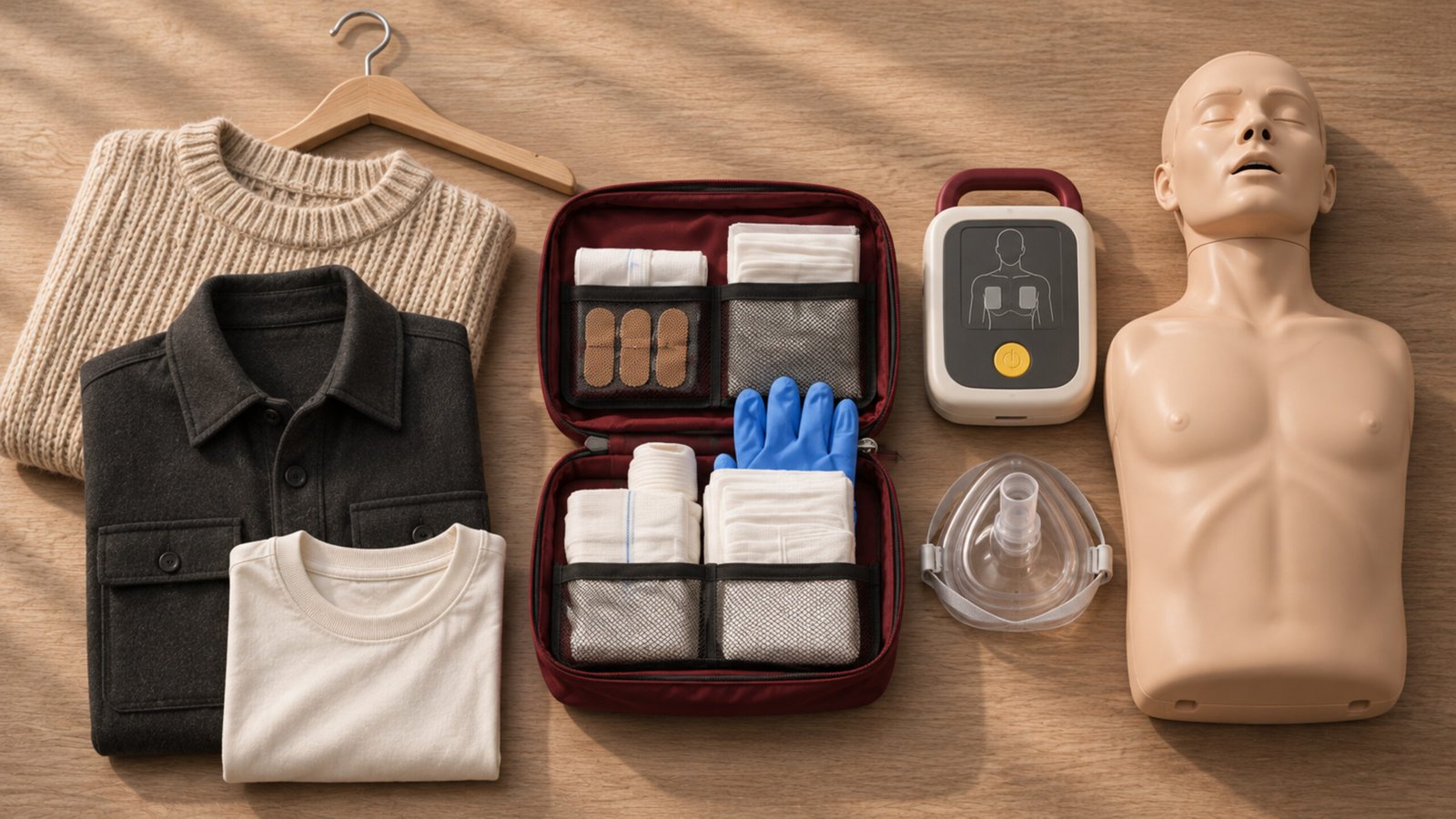
Pins, Shears, and Slippery Floors: First Aid for Fashion Teams
Fashion retail and studio work looks calm, but cuts, burns, slips, and fainting spells happen more often than you’d think. Every team needs a stocked kit, a simple plan, and a few people trained in CPR. Here’s how to get ready without slowing down your day.
Picture a busy Saturday at a boutique. A customer feels dizzy in the fitting room. A stylist nicks a finger on sharp shears. Would your team know what to do? Choosing the best First Aid training in Regina is the first step toward a confident yes.
Most owners plan for sales, not emergencies. But a calm, prepared team protects customers, coworkers, and your good name.
Why Does First Aid Matter in a Fashion Workplace?
Fashion work looks gentle. It isn’t always. Staff lift heavy boxes, climb step stools, and handle sharp tools. They stand for hours, often in hot, crowded rooms.
Customers bring their own risks. They walk in with wet boots, full shopping bags, and tired feet. Add a big sale day, and small problems can grow fast.
When someone knows what to do in the first few minutes, a scary moment often stays small. Training also builds confidence. People who’ve practiced are far less likely to freeze.
What Injuries Show Up Most in Boutiques and Studios?
Here are the usual suspects:
- Cuts and punctures. Pins, scissors, box cutters, and rotary blades cause most small wounds. They look minor, but they bleed and can get infected without proper care.
- Burns and scalds. Steamers and irons are everywhere in fashion. One quick brush against hot metal can leave a painful burn.
- Slips, trips, and falls. Wet entrances, loose cords, and trailing hems are common culprits. Winter makes it worse.
- Strains and sprains. Lifting stock and reaching for high shelves can hurt backs, wrists, and ankles.
- Fainting and dizziness. Warm fitting rooms, skipped lunches, and long shifts can leave people light-headed.
Most of these are easy to manage when your team acts quickly. The trick is knowing the first step.
What Should Go in Your First Aid Kit?
A kit only helps if it’s stocked and easy to reach. Keep one near the front counter and another in the back room or studio. Check both every month.
A solid kit includes bandages in several sizes, sterile gauze and tape, antiseptic wipes, burn gel or dressings, disposable gloves, a cold pack, and a CPR face shield. Add a pair of scissors and a small notepad, too.
Tape a short card inside the lid. List your emergency steps and your store’s address. A new hire can follow it even when nerves are high.
Also, name one trained person for every shift. When everyone assumes someone else will step in, nobody does.
What Do You Do If a Customer Faints?
This one catches many teams off guard. Stay calm and follow these steps:
- Make sure the area is safe, then call out for help.
- Gently check whether the person responds and is breathing.
- If they’re breathing, lay them flat and raise their legs slightly, as long as there’s no sign of injury.
- Loosen tight clothing and give them air and space.
- If they aren’t breathing normally, call 911, start CPR, and ask someone to bring an AED if you have one.
Even a quick faint deserves a follow-up. Encourage the person to rest, sip water, and see a doctor if they feel unwell.
These steps are a short guide, not a substitute for hands-on practice. Real training makes them feel automatic.
How Do You Choose the Right Course for Your Team?
Not every role needs the same class. A small shop team may do well with a focused session. Managers and supervisors might want a longer course with more detail.
Standard-level courses usually cover bleeding, burns, choking, and cardiac emergencies, along with CPR and AED use. That’s a good fit for most retail and studio crews.
When you compare classes, look for a few things:
- Hands-on practice. You learn compressions and bandaging by doing them, not by watching slides.
- Small class sizes. Everyone gets time with the equipment and the instructor.
- Plain-language teaching. Good instructors explain the “why” so the steps stick.
- Clear certificate details. Ask what the card covers and how long it stays valid.
Ask about group bookings, too. Training your whole team at once is easier on schedules and builds a shared plan.
How Often Should Your Team Refresh Their Skills?
Skills fade. Without practice, people forget how deep to press during CPR and when to call for help.
Put every renewal date on a shared calendar. Book refreshers before a certificate runs out, not after. Then run a quick five-minute drill each season. Ask, “Where’s the kit? Who calls 911? Who grabs the AED?”
Late autumn is a smart time to book. Holiday hiring brings new faces to your floor, and icy sidewalks bring new risks to your door. A team that trains now walks into the busy season ready.
What’s the Takeaway?
You can’t prevent every cut, burn, or fall. You can make sure your team responds well when one happens. Stock your kits, name your responders, and put real training on the calendar. A few hours now can make all the difference on the worst day of the year.
Where Can Regina Teams Find Training?
If you are looking for first aid training in and around Regina, Saskatchewan, then you may reach out to Coast2Coast First Aid & Aquatics in that area.