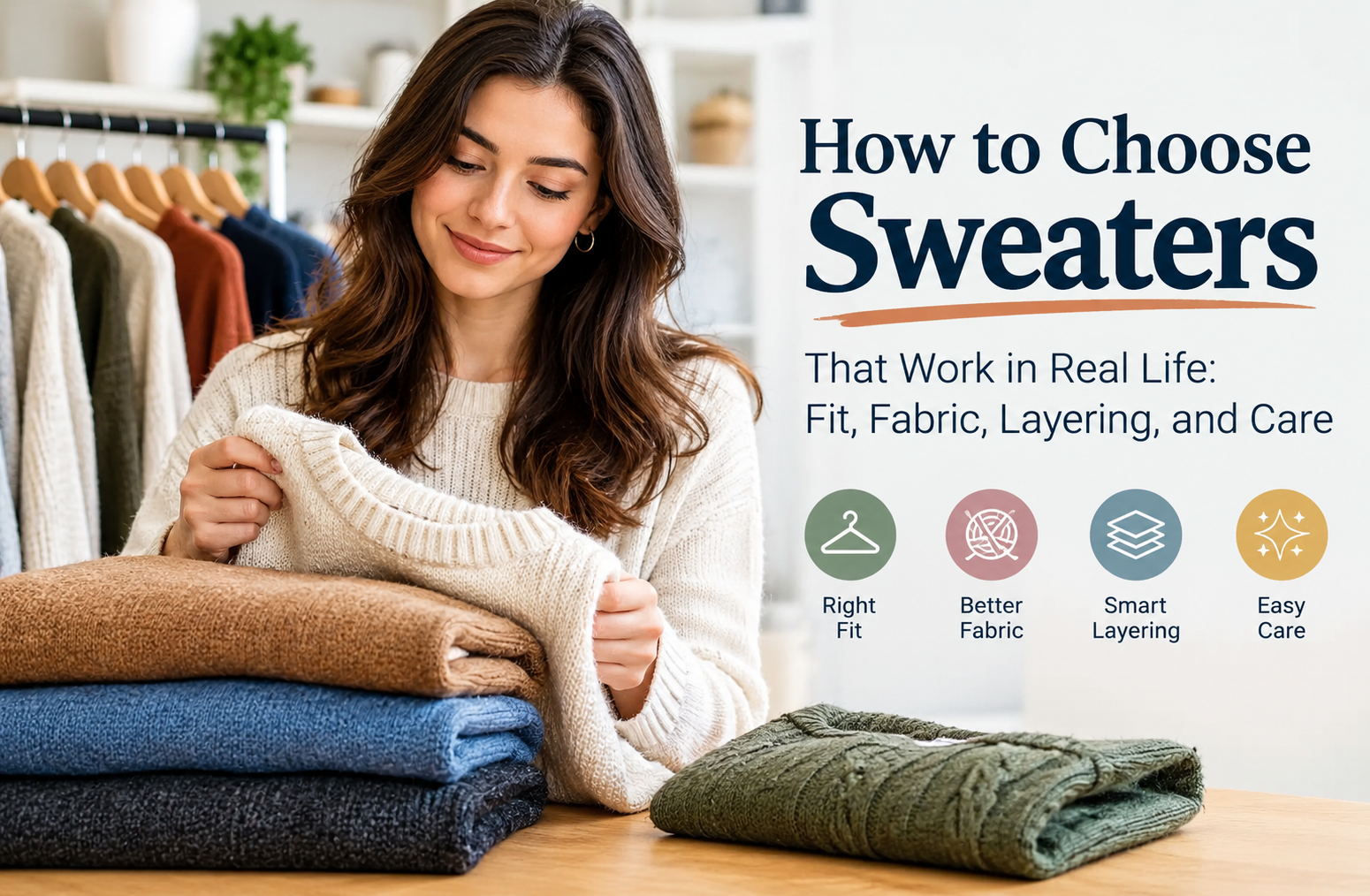
How to Choose Sweaters That Work in Real Life: Fit, Fabric, Layering, and Care
Key Takeaways
- Choose a sweater based on its job, such as work layering, travel, daily wear, or cold-weather use.
- Check the fit while sitting, reaching, and wearing the layer you plan to put underneath.
- Fabric weight affects warmth, breathability, movement, and how easily a sweater works beneath outerwear.
- Simple layering helps one sweater work across changing temperatures and seasons.
- Care labels provide the best instructions for washing, drying, folding, and storing a specific garment.
Table of Contents
- Why Sweater Choice Matters
- Start With How You Will Use It
- Compare Fabric and Weight
- Check the Fit in Motion
- Choose Shape and Layer With Purpose
- Style Sweaters Across the Year
- Care and Build a Useful Collection
- Common Questions About Choosing Sweaters
A useful sweater does more than look appealing on a hanger. It should feel comfortable through a full day, work with the clothes already in your closet, and suit the temperatures you actually encounter. Whether you need a polished office layer, a warm weekend knit, or comfortable plus size sweaters for flexible everyday outfits, start by considering how and where you will wear them.
The best choice usually comes down to four practical details: intended use, fabric weight, fit in motion, and care requirements. Color and trend can still matter, but they should support a sweater that earns regular wear rather than sitting unused between seasons.
Why Sweater Choice Matters
A sweater that is too heavy for indoor wear, too tight across the shoulders, or too delicate for your laundry routine may look good initially, but become difficult to reach for. A practical knit should let you move comfortably, work with more than one outfit, and make sense for the amount of warmth and coverage you need.
Start With How You Will Use It
Before shopping, identify the setting, expected temperature, desired coverage, and the number of outfits the sweater should support. That short exercise helps narrow the field quickly.
- Daily wear: Look for a soft, easygoing style that pairs with jeans, trousers, skirts, or leggings.
- Work outfits: Choose a smoother knit that fits comfortably over a blouse or under a blazer.
- Travel: Favor a lighter layer that can be worn on its own, over a T-shirt, or under a jacket.
- Cold weather: Leave room for a base layer and make sure your coat can fit over the sweater without restricting movement.
- Dressier occasions: A fine-knit pullover, cropped cardigan, or textured layer can add coverage without hiding the rest of the outfit.
Compare Fabric and Weight
Thickness is not the only factor that affects comfort. Lightweight knits are useful indoors, in mild weather, and beneath jackets. Medium-weight sweaters often handle everyday cool conditions well. Chunky styles add visual texture and can feel cozy, but they also need more room under outerwear.
Fiber content matters, too. Cotton and linen blends can feel lighter, while wool-based fibers are often selected for cooler conditions. Synthetic fibers can add stretch, softness, or simpler care. When dressing for cold weather, strategic layering and an air gap between garments can help retain warmth without relying on one exceptionally bulky piece.
Photorealistic macro close-up of a soft layered sweater knit, showing detailed ribbed and woven fibers in neutral tones, with shallow depth of field and a softly blurred wardrobe background.
Texture changes both fit and appearance. Ribbed knits commonly sit closer to the body because of their stretch, while open knits allow more airflow and may need a camisole or fitted top beneath them. Inspect the knit in natural movement, especially if it has a loose stitch or a textured pattern.
Check the Fit in Motion
Do not judge fit only while standing in a fitting room. A sweater should work when you reach for a bag, type at a desk, sit for a meal, or lift your arms to put on a coat.
- Raise both arms and check for pulling through the shoulders and upper back.
- Sit down to see whether the hem rides up more than you like.
- Reach forward to test comfort across the back and sleeves.
- Look for stretched stitches, gaping, or tightness across the bust and upper arms.
- Try it over the top you expect to wear most often underneath.
Sizing up can provide more room, but it may also lengthen the sleeves, shift the shoulder seams, and change the neckline. Instead of choosing a size by the label alone, focus on shoulder placement, torso ease, sleeve comfort, and whether the hem falls where you want it to.
Choose Shape and Layer With Purpose
Different silhouettes solve different wardrobe needs. Pullovers work well as the main top in an outfit. Cardigans offer easy temperature control because they can be opened, buttoned, or removed. Longer styles add coverage, cropped styles suit high-rise bottoms, and shrugs or boleros cover the shoulders and arms while leaving most of the outfit visible.
For a balanced layered outfit, begin with a smooth base layer that will not bunch. Add a sweater with enough room through the arms, then test it under the jacket or coat you plan to wear. Pairing several thick layers can limit movement, so combine one substantial piece with thinner supporting layers when possible.
Use Necklines to Refine the Outfit
Crew necks provide familiar coverage and an easy, everyday look. V-necks create a more open frame around the face and can leave room for a collar or necklace. Collared sweaters add structure, while open-front cardigans make it easier to show the top underneath.
Style Sweaters Across the Year
Sweaters are not limited to winter. In spring, a fine knit can work with lighter pants, skirts, or dresses. A lightweight cardigan is useful for cool summer evenings, air-conditioned restaurants, and travel days. Fall invites textured sweaters with denim, boots, or layered shirts. In winter, combine a close-fitting base layer, a warmer knit, and outerwear that still allows comfortable movement.
A neutral sweater can shift between casual and polished settings depending on the pieces around it. Wear it with denim for a relaxed look, tailored trousers for work, or a skirt and simple accessories for a more refined outfit.
Care and Build a Useful Collection
Always follow the garment’s care label first, because fiber blends, trims, dyes, and construction can require different treatment. Reviewing fiber content and permanent-care labels before buying can also help you choose a sweater that fits your routine.
- Use the recommended wash method and water temperature.
- Avoid hanging a wet sweater, since its weight can pull at the shoulders.
- Reshape the garment while damp when its care instructions allow it.
- Fold heavier knits for storage rather than leaving them on hangers for long periods.
- Store sweaters clean and fully dry, and remove pills with an appropriate fabric tool when needed.
A small collection can cover most needs: one everyday pullover, one cardigan for layering, one warmer sweater for colder days, and one lighter knit for mild weather or indoor spaces. Add a colorful or textured statement piece after the basics work with the rest of your wardrobe.
Common Questions About Choosing Sweaters
What is the most versatile sweater style?
A medium-weight pullover or simple cardigan is often the easiest to wear across multiple outfits. The most versatile option for you will depend on your climate, dress code, and preferred level of coverage.
Should a sweater fit loosely or closely?
Choose a closer fit for easy layering beneath jackets, or a relaxed fit for casual outfits and lightweight base layers. The sweater should still allow normal movement without pulling or bunching.
How many sweaters does a practical wardrobe need?
Three to five useful pieces can be a strong starting point. Add more only when you identify a real gap, such as needing a lighter travel layer or a warmer option for outdoor days.