One Missing Tooth, Many Choices: A Guide to Tooth Replacement
A single missing tooth can affect more than a smile. It may change how comfortably you chew, influence speech, and leave nearby teeth without the support they once had. People considering single tooth dental implants Orlando, FL, often want a natural-looking fixed option, but an implant is only one of several treatments worth discussing. No option is automatically right for every situation. A replacement should fit the location of the missing tooth, the condition of the surrounding teeth, and the person’s practical goals for comfort, appearance, treatment time, and long-term maintenance.
Why One Missing Tooth Deserves Attention
Some people adapt well after losing one tooth, especially when the space is less visible or does not interfere with daily chewing. Still, a space can allow neighboring teeth to drift or tip over time. The opposing tooth may also move farther into the gap. These changes can affect the bite and complicate future treatment. The jawbone in the area may gradually lose volume because it no longer receives stimulation from a natural tooth root. Replacing a tooth is not always an emergency. Still, it is wise to have the space evaluated early, so you understand the likely effects of waiting and the options available now.
The Main Ways to Replace One Tooth
- Implant-supported crown: A small implant placed in the jawbone supports a separate crown. It does not rely on the teeth beside the gap for support.
- Traditional fixed bridge: A replacement tooth is connected to crowns placed over the teeth on either side of the space.
- Resin-bonded bridge: A replacement tooth is attached to nearby teeth with thin bonded wings, typically on the back surfaces.
- Removable partial denture: A removable appliance fills the gap and can also replace additional missing teeth if needed.
How an Implant-Supported Crown Works
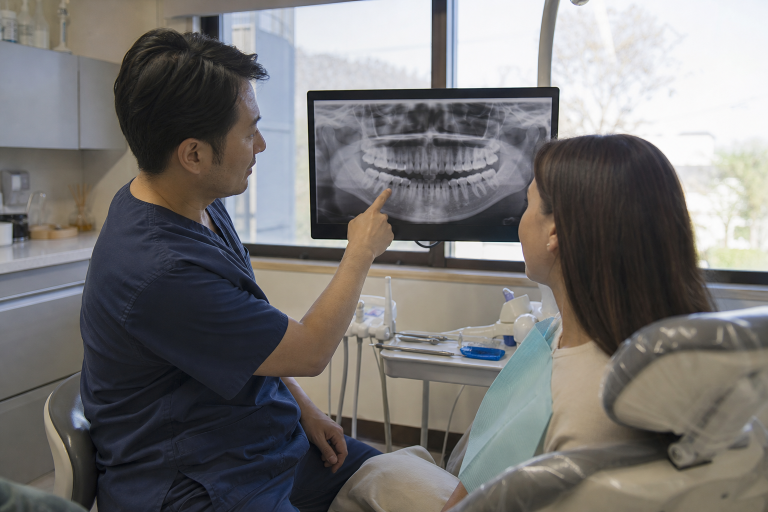
An implant-supported crown has three main parts: the implant fixture in the jawbone, a connector called an abutment, and the visible crown. These dental implant basics help explain why planning must account for bone, gum tissue, and chewing forces. Treatment usually begins with an exam, health review, and dental imaging. If a damaged tooth remains, it may need to be removed first. The implant is then placed surgically, followed by a healing period during which the bone integrates with it. Once the site is ready, the dentist designs and attaches the final crown. Timing varies considerably. Some patients need several months from extraction through final crown placement, while others may follow a different schedule based on healing, available bone, and whether grafting or other preparatory treatment is needed. An implant can be a strong option, but it involves surgery and requires ongoing cleaning around the crown and gumline.
When a Traditional Bridge May Make Sense
A traditional bridge uses the teeth next to the missing space as anchors. Those teeth are reshaped so crowns can fit over them, with the replacement tooth suspended between or beside the supporting crowns. This may appeal to someone who wants a fixed tooth replacement without implant surgery. A bridge may be especially worth considering when neighboring teeth already need crowns or have large restorations. Important questions include whether those teeth are strong enough for the added role, whether the bite places heavy force on the bridge, and whether the person can clean beneath the replacement tooth every day. In many cases, a bridge can be completed faster than an implant restoration.
Resin-Bonded Bridges and Removable Partial Dentures
Resin-Bonded Bridges
A resin-bonded bridge attaches a replacement tooth to one or more nearby teeth with thin wings bonded to the back surfaces. Because this approach often requires less alteration of healthy tooth structure, it may be considered for selected front-tooth spaces, younger patients, or temporary needs. However, it is not ideal for every location or bite. Strong biting pressure, clenching, limited bonding surface, tooth shape, and moisture control during placement can affect how well the bridge stays attached.
Removable Partial Dentures
A removable partial denture fills one or more gaps with an appliance that can be removed for cleaning. It can be a flexible choice, particularly when several teeth are missing or when a person wants a lower initial cost. Possible drawbacks include movement, adjustment appointments, visible clasps in some designs, and the need to remove and clean it daily.
What a Dentist Checks Before Recommending Treatment
- Gum health: Active gum disease or infection may need treatment before tooth replacement.
- Bone volume: Imaging helps show whether an implant site has adequate bone and whether grafting may be considered.
- Nearby teeth: Their strength, alignment, restorations, and health can influence whether a bridge is practical.
- Bite forces: Grinding, clenching, and heavy chewing can affect the design and durability of any replacement.
- Overall health: Medical conditions, tobacco use, and certain medications can influence healing and treatment planning.
- Personal priorities: Budget, treatment timeline, appearance, comfort, and willingness to maintain the restoration all matter.
Questions to Ask Before Choosing an Option
- Will nearby teeth need to be altered?
- How long will treatment take, and will I need a temporary tooth?
- What cleaning tools or techniques will I need at home?
- What problems could cause the restoration to chip, loosen, or need repair?
- Which costs, including imaging, temporary restorations, grafting, or future repairs, may not be included in the first estimate?
What Research Says About Tooth Replacement Decisions
Modern dentistry recognizes several accepted methods for replacing a single missing tooth. Reviews of clinical treatment options for a missing tooth emphasize that selecting between conservative, fixed, removable, and implant-supported approaches requires an individualized assessment. Tooth location, supporting tissues, aesthetics, bite pressure, and patient preferences all shape the final recommendation.
Daily Care After a Tooth Is Replaced
- Brush twice daily with fluoride toothpaste.
- Clean between teeth and around the replacement as directed by your dental professional.
- Use floss threaders, interdental brushes, or water irrigation if recommended for your restoration.
- Avoid biting hard objects, opening packages with teeth, or using the replacement as a tool.
- Wear a night guard if grinding or clenching is a concern.
- Keep routine dental appointments so small concerns can be addressed early.
Signs That Call for a Dental Visit
Contact a dental professional if you notice new pain, swelling, bleeding, a bad taste, a loose crown or bridge, changes in your bite, persistent food trapping, a chipped restoration, or sore spots from a removable appliance. Prompt attention may help prevent a manageable problem from becoming more complicated.
Final Thoughts
Replacing one missing tooth involves more than simply filling a space. The right choice should restore comfortable chewing, support natural speech, complement the appearance of your smile, and protect long-term oral health. Patients should consider how each treatment option affects neighboring teeth, gum health, jawbone support, maintenance, treatment time, and overall cost. A thorough dental examination can help identify the condition of the surrounding teeth and tissues while clarifying which solutions are realistic for your situation. Taking time to discuss the benefits, limitations, recovery process, and expected maintenance of each option can make the decision easier. Ultimately, the best replacement is one that meets your oral health needs, personal preferences, budget, and daily routine while providing reliable function and comfort for years to come.