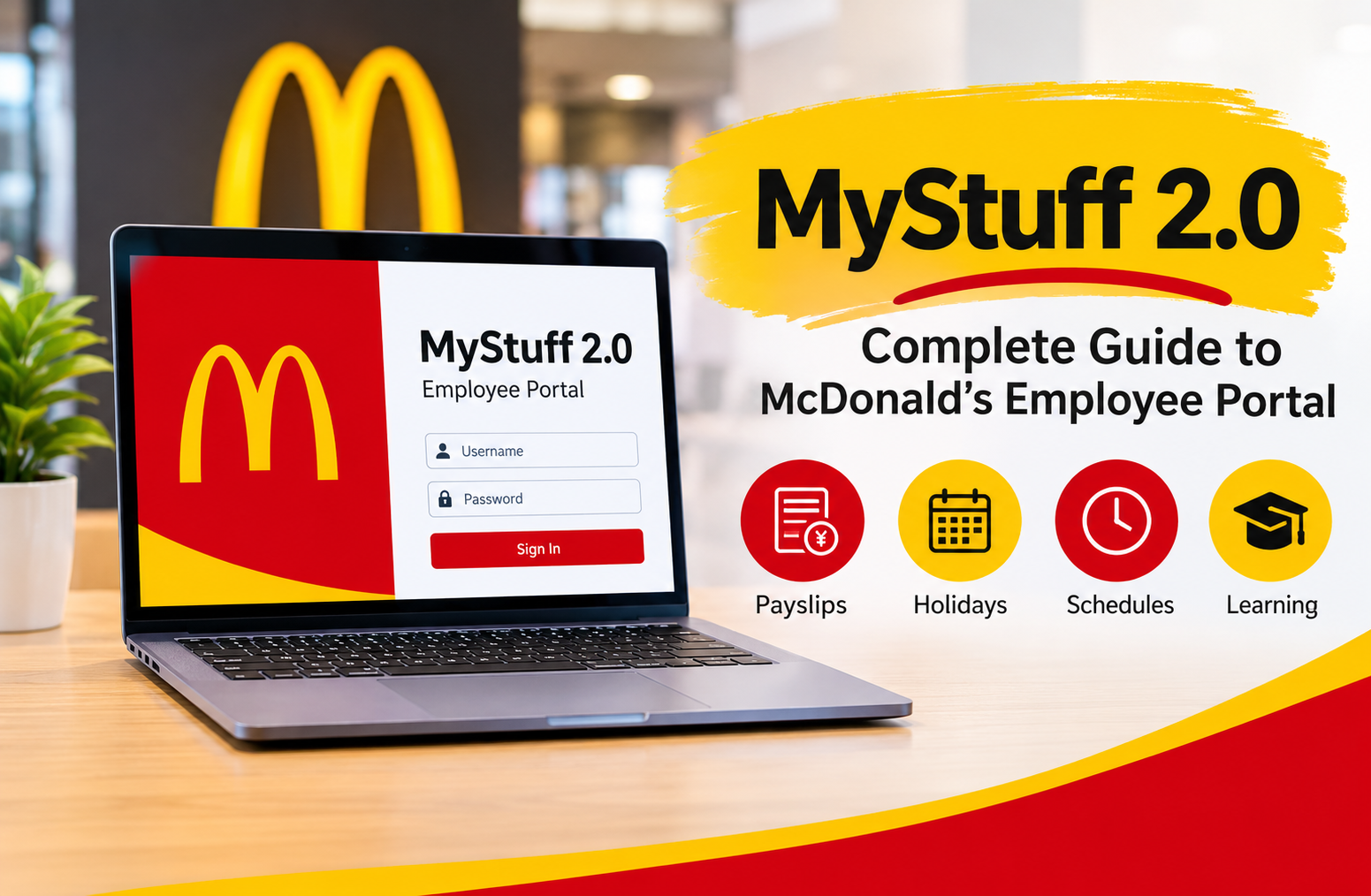
MyStuff 2.0: Complete Guide to McDonald’s Employee Portal
MyStuff 2.0 is an employee self-service platform associated with McDonald’s in the United Kingdom. It gives eligible employees a central place to access important work-related information, manage personal details, review wage slips, and handle holiday or time-off information. Instead of depending entirely on paper documents or contacting a manager for every routine query, employees can use this digital system to manage several aspects of their working lives.
For McDonald’s employees, understanding how MyStuff 2.0 works can make everyday workplace tasks easier. Whether someone is a new crew member, an experienced employee, or a manager, having access to the right information at the right time is important. The platform is designed to support that need through a mobile-friendly experience and a single sign-on approach to connected workplace resources.
However, there is more to the system than simply logging in and checking a payslip. Employees also need to understand account access, available services, personal information management, workplace scheduling, and common technical problems. Knowing which features are available and how to use them correctly can help prevent confusion.
This guide explains what the platform is, how it works, who can access it, its main benefits, potential limitations, and practical steps for using it responsibly. It also separates officially documented features from details that may depend on an employee’s role, location, or workplace permissions.
What Is MyStuff 2.0?
MyStuff 2.0 is a digital employee and human resources system used within McDonald’s UK. Its main purpose is to give employees convenient access to selected personal employment information and workplace services.
The platform is designed around employee self-service. This means that workers can access certain records and complete supported tasks themselves rather than relying on traditional paper-based processes or making repeated requests to management.
According to McDonald’s UK corporate documentation, the system allows employees to manage their personal information, manage holidays and time off, and view wage slips. The company also describes it as a mobile-friendly platform that uses a unique employee ID and single sign-on to connect users with different workplace tools.
These connected resources include learning and development and scheduling services.
This makes the platform an important part of the company’s wider digital workplace environment.
Understanding the Purpose of the Platform
The main idea behind MyStuff 2.0 is centralisation.
In a traditional workplace, employees might need to contact different departments or managers to find information about their employment. They may also depend on printed documents, separate websites, or manual administrative processes.
A central employee platform can make these activities easier to manage.
For example, an employee who wants to review a recent wage slip can use the relevant payroll section if it is available to their account. Someone who needs time away from work can access the supported holiday or time-off process.
The system also connects employees with other workplace resources, helping them find information related to their responsibilities and development.
It is important to understand that not every employee will necessarily see identical options. Access can depend on account permissions, employment arrangements, and the services made available to a particular workforce.
How MyStuff 2.0 Works
The platform works as a digital access point for employee information and connected workplace resources.
Employees receive account credentials through their employment or onboarding process. After signing in through the appropriate company-approved access route, they can use the services available to their account.
The exact appearance of the dashboard may differ depending on the employee’s permissions and the tools currently available.
Generally, the process involves three main stages.
1. Employee Authentication
The first stage is verifying the employee’s identity.
A unique account helps ensure that personal employment information is available only to the appropriate user. The single sign-on approach also provides access to connected workplace tools without requiring employees to manage an entirely separate identity for every service.
Employees should use the credentials supplied through authorised McDonald’s onboarding or support channels.
2. Accessing Employee Services
After authentication, users can access the sections enabled for their account.
These may include:
- Personal employment information.
- Wage slips and payroll information.
- Holiday and time-off management.
- Work scheduling resources.
- Learning and development tools.
Not all services necessarily appear in the same place or operate through an identical interface.
3. Managing Information and Requests
The final stage involves using the available services.
Employees can review relevant records, check information, and complete supported administrative tasks.
Some actions may require approval from a manager or another authorised person. For example, submitting a holiday request does not automatically mean that the requested time off has been approved.
Understanding this distinction helps employees avoid making incorrect assumptions about their employment arrangements.
Main Features of MyStuff 2.0
The value of an employee self-service platform depends on the practical services it provides. MyStuff 2.0 focuses on several important areas of workplace administration.
1. Personal Information Management
One of the important features is the ability to manage personal employment information.
Employees need accurate records because their contact information and other details can affect workplace communication and administration.
Depending on the permissions available, the system may provide access to personal information that employees can review or update.
Examples of information that may be relevant include:
- Contact information.
- Personal employment details.
- Account information.
- Other records made available through the HR system.
Employees should review their information carefully and follow the official process if a particular field cannot be changed directly.
Keeping personal records accurate helps reduce administrative confusion.
For example, an outdated contact number could make it difficult for management to reach an employee about an important workplace matter.
2. Payslip Access
Payroll information is one of the most useful parts of an employee self-service system.
A payslip provides details about an employee’s earnings during a particular pay period. It can help workers understand their pay and identify possible discrepancies.
Through the relevant wage-slip service, eligible employees can view their available payroll documents.
A payslip may contain information such as:
- Basic earnings.
- Additional payments, where applicable.
- Deductions.
- Tax-related information.
- Net payment.
- The relevant pay period.
The exact information depends on the employee’s circumstances and the payroll documentation provided.
Employees should check their wage slips rather than assuming that the amount received in their bank account is always correct.
If something appears incorrect, they should compare the document with their agreed working arrangements and raise the issue through the appropriate payroll or management channel.
Why payslip access matters
Digital access can make it easier to review previous payment information without searching through paper documents.
It can also help employees maintain their own financial records.
However, a digital payslip should still be checked carefully. The availability of a document does not automatically guarantee that every payment or deduction is correct.
3. Holiday and Time-Off Management
Managing holidays is another central purpose of the system.
Employees need a reliable way to understand their available time off and submit requests according to workplace procedures.
MyStuff 2.0 provides access to holiday and time-off management services.
Depending on the account and applicable workplace arrangements, employees may be able to review relevant information and submit requests through the available process.
A typical holiday-management process involves:
- Reviewing available holiday information.
- Checking the dates being requested.
- Submitting the request through the supported system.
- Waiting for the appropriate approval.
- Checking the final status.
Employees should remember that submitting a request is not the same as receiving approval.
Workforce requirements, staffing levels, existing requests, and company policies can influence whether particular dates are approved.
For this reason, employees should wait for confirmation before making important personal arrangements based on requested leave.
4. Workplace Scheduling
Scheduling is another important part of the connected digital workplace environment.
Employees need to understand when they are expected to work. Accurate scheduling information helps them organise personal responsibilities, transport, and other commitments.
McDonald’s UK documentation identifies scheduling among the workplace resources connected through the employee system.
The exact scheduling functions available may vary.
Depending on the tools provided to an employee, scheduling resources may help with reviewing work arrangements and accessing relevant shift information.
Employees should regularly check the authorised scheduling resource used by their restaurant or workplace.
They should also avoid assuming that a shift has changed simply because they have submitted a request or discussed a possible adjustment with another employee.
The final confirmed schedule should always be treated as the important reference.
5. Learning and Development
Professional development is an important part of working in a large organisation.
Employees may need training to understand workplace procedures, improve their skills, and prepare for additional responsibilities.
MyStuff 2.0 connects employees with McDonald’s learning and development resources.
This can help make relevant workplace learning materials easier to access.
Training may cover different areas depending on an employee’s position and development requirements.
Examples of common workplace learning areas include:
- Customer service.
- Food safety procedures.
- Workplace responsibilities.
- Operational standards.
- Communication skills.
- Leadership development.
The precise training content is determined by the relevant company learning resources rather than being identical for every employee.
Having a central access point can make it easier to find the appropriate learning materials when they are needed.
6. Single Sign-On Convenience
Single sign-on is another important part of the platform’s design.
Instead of managing completely separate credentials for every connected workplace service, employees can use their assigned identity to access supported resources.
This approach can reduce the effort involved in moving between workplace systems.
It can also make account administration more consistent.
However, single sign-on does not mean that every employee automatically receives permission to access every company tool.
The services available still depend on the account’s authorisation and the employee’s role.
Who Can Use MyStuff 2.0?
MyStuff 2.0 is intended for employees who have been provided with access through the relevant McDonald’s UK employment system.
It is not a general public platform where anyone can register and create an employee account.
Access is connected to employment and the account permissions assigned to an individual.
Potential user groups include:
McDonald’s Crew Members
Crew members are among the employees who may use the platform to access personal employment information and relevant workplace resources.
For someone working regular shifts, having access to wage slips, personal details, and time-off information can be particularly useful.
Crew Trainers
Employees with training responsibilities may also need access to relevant learning and development resources.
Their available services depend on the responsibilities and permissions assigned to their accounts.
Shift Managers
Shift managers may need workplace information related to their own employment and management responsibilities.
The tools available to them can differ from those provided to standard crew members.
Restaurant Managers
Restaurant managers have additional operational responsibilities.
However, employees should not assume that every management function is handled through the same employee self-service dashboard.
Some management services may operate through separate authorised systems.
Franchise Employees
McDonald’s operates through both company-owned and franchised restaurants.
Employee arrangements and access procedures may therefore differ depending on the organisation operating a particular restaurant.
Employees should follow the onboarding and technical guidance provided by their employer.
How to Access MyStuff 2.0
Accessing the platform begins with having valid employee credentials.
New employees should receive information about their account during the appropriate onboarding process.
Existing employees should use their established company-approved login details.
Step 1: Obtain Your Employee Login Details
Before attempting to sign in, make sure you have the credentials provided through your employment.
If you are a new employee and have not received your login information, contact your manager or the relevant onboarding support team.
Do not use another employee’s credentials.
Step 2: Open the Authorised Login Page
Use the official access address supplied by McDonald’s or your employer.
Check that the address is correct before entering personal information.
This is particularly important because several independent websites use names similar to MyStuff 2.0.
An informational website discussing the platform is not necessarily the official employee login portal.
Step 3: Enter Your Credentials
Follow the authentication instructions shown on the authorised sign-in page.
Enter your assigned account information carefully.
Check for typing errors, incorrect capitalisation, or unnecessary spaces if the system rejects your details.
Step 4: Complete Any Additional Verification
If the login process requests additional verification, follow the instructions provided by the authorised system.
Never share verification codes with another person.
If an unexpected security message appears, contact the appropriate support team rather than attempting to bypass it.
Step 5: Review Your Dashboard
After successfully signing in, review the services available to your account.
Locate the relevant sections for personal information, wage slips, time off, scheduling, or learning resources.
New users should take some time to understand the layout before attempting to make important changes.
Step 6: Sign Out When Finished
If you use a shared or public device, sign out after completing your work.
This helps reduce the risk of someone else accessing your employment information.
It is also sensible to avoid saving passwords on devices that other people can use.
Is MyStuff 2.0 Available on Mobile Devices?
Mobile accessibility is an important part of the platform.
McDonald’s UK documentation describes MyStuff 2.0 as a mobile-friendly employee system.
This means the service is designed to make relevant employee information accessible through mobile devices.
For employees who do not regularly use a desktop computer, this can be a useful advantage.
A mobile-friendly platform can make it easier to:
- Review available employment information.
- Access wage slips.
- Check relevant workplace resources.
- Manage supported time-off information.
- Access connected learning resources.
The experience may depend on the browser, device, internet connection, and available account permissions.
Employees should use the authorised web address and avoid downloading unofficial applications that claim to provide access to the employee portal.
If a mobile page does not display correctly, trying an updated browser or another trusted device may help identify the problem.
Benefits of MyStuff 2.0 for Employees
A digital employee platform can provide several practical advantages.
The benefits are not limited to convenience. They can also improve access to workplace information and reduce unnecessary administrative steps.
Greater Control Over Employment Information
Employees often need access to their own employment records.
A self-service system makes it easier to review available information without depending on someone else to retrieve every document.
This can encourage employees to take greater responsibility for checking their records.
Reduced Administrative Effort
Routine employment questions can take time for both employees and managers.
If an employee can independently access a payslip or relevant personal information, there may be less need for repeated administrative requests.
This can allow management teams to spend more time on other workplace responsibilities.
Convenient Access to Digital Records
Digital records are easier to review than documents that must be collected physically.
Employees can access supported information through compatible devices and save documents where permitted.
This can be particularly useful when someone needs an older wage slip for personal recordkeeping.
Better Workplace Organisation
Access to relevant workplace resources can help employees stay organised.
For example, checking scheduling information and reviewing time-off details can help employees plan their personal commitments more effectively.
Support for Employee Development
Access to learning resources can make workplace training more convenient.
Employees can locate relevant materials and stay informed about development opportunities available through their organisation.
Improved Information Accessibility
A central digital environment can reduce the need to search across multiple communication channels.
Employees can find several categories of workplace information through a more organised system.
However, this advantage depends on the accuracy of the records and the availability of the relevant services.
Challenges and Limitations
Although MyStuff 2.0 can make employee administration easier, it is not completely free from limitations.
Understanding these issues helps employees use the system more effectively.
1. Login Problems
One of the most common difficulties with any employee portal is account access.
An incorrect password, an account that has not been activated, or a technical authentication issue may prevent an employee from signing in.
New employees may also experience delays while their account is being created or configured.
The best approach is to check the login information and contact the relevant support team if the problem continues.
2. Forgotten Passwords
Forgetting a password can prevent access to important employment information.
Employees should use the official password recovery process if one is available.
If self-service recovery does not work, they should contact their manager or authorised technical support.
They should never use unofficial password-reset websites.
3. Limited Account Permissions
Sometimes employees can successfully sign in but cannot find a particular service.
This does not necessarily mean that the system is broken.
The service may not be available to their role, or their account may not have received the required permissions.
A manager or authorised support representative can help determine whether the missing feature is expected or requires investigation.
4. Internet Connectivity
Because the platform is accessed digitally, a stable internet connection is important.
Slow connections can affect page loading and document access.
Employees experiencing connection problems should check their network before assuming that their account is damaged.
5. Browser Compatibility
Older browsers may not display modern websites correctly.
If the platform does not load properly, employees can try an updated browser.
They should also check whether cookies or browser settings are preventing the authentication process from working.
6. Delayed Information Updates
Some workplace information may not appear immediately after a change has been submitted.
For example, a request may require management approval before its status changes.
Employees should understand the difference between information that has been submitted, information that is being processed, and information that has been officially confirmed.
7. Dependence on Digital Access
Not every employee has the same level of comfort with digital systems.
Some workers may find it difficult to navigate account settings, access documents, or understand technical messages.
Clear onboarding instructions and support from management remain important.
An employee portal should make administrative tasks easier, not create unnecessary barriers.
How to Fix Common MyStuff 2.0 Problems
When an employee experiences a problem, it is helpful to identify the cause before making changes to the account.
The following troubleshooting steps address common issues without relying on unverified technical procedures.
Problem: The Login Page Will Not Open
Possible causes include:
- An unstable internet connection.
- A temporary website issue.
- An incorrect website address.
- Browser compatibility problems.
What to do:
- Check your internet connection.
- Confirm that you are using the authorised login address.
- Refresh the page.
- Try another updated browser.
- Try accessing the service from another trusted device.
- Contact authorised support if the issue continues.
Problem: Your Password Is Not Accepted
First, check that the username and password are entered correctly.
Pay attention to capital letters and unnecessary spaces.
If the credentials still do not work, use the authorised recovery process or contact the appropriate support team.
Avoid repeatedly guessing passwords because this may trigger additional account security restrictions.
Problem: You Cannot Find Your Payslip
If you can sign in but cannot locate a wage slip, consider the following possibilities:
- The relevant payroll document has not yet been made available.
- You are looking in the wrong section.
- Your account permissions need checking.
- There may be a temporary technical issue.
Contact the relevant payroll or management team if the document remains unavailable.
Do not assume that a missing document means that a payment has not been processed.
Problem: Your Personal Information Is Incorrect
Check the information displayed in your account.
If the platform allows the relevant details to be updated, follow the authorised process.
For information that cannot be edited directly, contact the appropriate HR or management representative.
Keep any supporting information ready if a correction requires verification.
Problem: A Holiday Request Is Not Showing the Expected Status
A submitted request may still be waiting for approval.
Check the request details and any available status information.
If there is no clear update, speak with your manager.
Do not assume that a request has been accepted until you receive confirmation through the appropriate process.
Problem: The Platform Displays an Error
Take note of the message displayed.
Try refreshing the page and checking your internet connection.
If the problem continues, provide the exact error message to authorised support.
A clear description of the issue can make technical troubleshooting more efficient.
MyStuff 2.0 and Employee Data Security
Employee platforms contain information that should be treated carefully.
Personal details, employment records, and wage slips can be sensitive. Employees should therefore take reasonable precautions when accessing their accounts.
Use Strong Account Credentials
Choose a strong password according to the organisation’s security requirements.
Avoid using easily guessed information or reusing passwords from unrelated websites.
Never Share Your Login Details
Your employee account is intended for your own use.
Sharing passwords or verification codes can put personal information at risk.
Even if another employee offers to help with a routine task, they should not need your password.
Use Trusted Devices
Whenever possible, access the platform through a personal or approved device.
Be particularly careful when using computers in public places or shared workplace environments.
Avoid Suspicious Links
Some websites may imitate employee portals or use similar names.
Before entering login details, verify that the website address comes from an authorised company source.
Do not trust unsolicited messages requesting passwords or personal information.
Sign Out of Shared Devices
Signing out after using a shared computer helps protect your account.
Also avoid leaving downloaded employment documents in publicly accessible folders.
Review Account Activity and Report Concerns
If you notice unfamiliar activity or believe someone else has accessed your account, report the issue through the appropriate company security channel.
Taking action quickly can help limit potential problems.
MyStuff 2.0 vs Traditional Employee Management
Traditional employee administration often relies on printed documents, verbal communication, and manual requests.
Digital employee platforms offer another approach by making selected services available online.
The difference can be understood through several practical examples.
| Area | Traditional Approach | Digital Self-Service Approach |
| Personal records | Contacting administration | Reviewing available digital information |
| Payslips | Collecting paper documents | Accessing available wage slips online |
| Holiday information | Asking management | Using supported time-off services |
| Workplace resources | Separate communication channels | Connected digital resources |
| Training | Printed or separately distributed materials | Access through learning resources |
| Account access | Individual service arrangements | Single sign-on for connected tools |
The table illustrates general differences between administrative approaches. It does not mean that every traditional process has disappeared or that every task can be completed through one digital dashboard.
Some activities still require direct communication with management.
For example, a complicated payroll question may need personal assistance, while a holiday request may require approval.
Digital self-service is most effective when it complements human support rather than attempting to replace it entirely.
How MyStuff 2.0 Supports the Employee Experience
Employee experience includes the different interactions people have with their workplace.
It covers more than salary or working hours. It also includes communication, access to information, professional development, and the ability to manage routine responsibilities.
An employee platform can contribute to this experience in several ways.
Making Information Easier to Find
Employees are more likely to stay organised when important information is accessible.
A central platform can reduce the time spent searching for employment records or contacting different people for basic information.
Supporting Independent Working
Self-service tools allow employees to handle supported tasks independently.
This can create a more convenient experience, especially when employees need information outside normal office hours.
Connecting Employees With Development Resources
Professional growth requires access to useful training and learning materials.
Connecting employees with relevant resources can make development information easier to locate.
Encouraging Better Record Management
Digital access can help employees become more familiar with their own employment information.
Regularly checking payslips and personal records can make it easier to identify missing or incorrect details.
Improving Administrative Communication
A connected workplace environment can support more organised communication.
However, employees should continue using direct communication with managers when a situation requires explanation, clarification, or approval.
Practical Tips for Getting the Most From MyStuff 2.0
Using an employee portal effectively involves more than knowing how to sign in.
A few simple habits can make the experience more useful.
Check Your Employment Information Regularly
Make a habit of reviewing important records.
If you notice incorrect information, report it through the appropriate process rather than allowing the issue to continue.
Keep Your Payslips Organised
Where downloads are available, maintain a secure record of important wage slips.
Organising documents by pay period can make it easier to find them when needed.
Review Holiday Information Before Making Plans
Check your available information and follow the official approval process.
Avoid treating an unapproved request as confirmed leave.
Stay Informed About Workplace Resources
Explore the services available to your account.
Understanding where important resources are located can save time when you need them later.
Keep Your Login Details Secure
Do not share your credentials.
Use the official access route and follow company security instructions.
Ask for Help When Necessary
If something is unclear, contact your manager or the appropriate support team.
A quick question can prevent misunderstandings about pay, scheduling, or employment information.
Is MyStuff 2.0 an Official McDonald’s Platform?
This question is important because several independent websites publish articles about MyStuff 2.0.
The platform itself is documented in McDonald’s UK corporate material as an employee HR system.
The company’s documentation describes its role in personal information management, holidays, time off, wage slips, and access to connected workplace resources.
However, not every website using the MyStuff 2.0 name is an official McDonald’s service.
Some websites are independent information sources that publish login instructions, employee guides, and general explanations.
Employees should distinguish between three things:
- The employee system used within McDonald’s UK.
- An authorised login page used to access company services.
- Independent websites that discuss the platform.
An independent guide may provide useful general information, but it should not be treated as the authority for account credentials, security instructions, or employment policies.
For reliable information about the company’s description of the platform, consult the McDonald’s UK corporate governance framework.
MyStuff 2.0 and the Importance of Employee Self-Service
Employee self-service has become an important part of modern workplace administration.
Organisations need practical ways to make employment information available while reducing unnecessary administrative work.
A system such as MyStuff 2.0 supports this approach by bringing selected employee services into a connected digital environment.
The value of this approach can be understood through three main areas.
Accessibility: Employees can access supported information through a mobile-friendly platform.
Efficiency: Routine administrative tasks can become easier when employees can manage available information independently.
Organisation: Centralised access can help employees keep track of personal employment records and relevant workplace resources.
These benefits depend on accurate information, suitable account permissions, and effective support.
Technology alone cannot solve every workplace problem. Employees still need clear communication, appropriate management assistance, and reliable administrative processes.
For this reason, the strongest approach combines digital convenience with human support.
Frequently Asked Questions About MyStuff 2.0
1. What is MyStuff 2.0 used for?
MyStuff 2.0 is an employee self-service and HR platform associated with McDonald’s UK. It provides access to services such as personal information management, holiday and time-off management, wage slips, scheduling resources, and learning and development tools.
2. Who can access MyStuff 2.0?
The platform is intended for eligible McDonald’s UK employees who have been provided with authorised account credentials. Available services depend on employment status, role, and account permissions.
3. Can I check my payslips through MyStuff 2.0?
Yes. McDonald’s UK documentation identifies wage-slip access as one of the platform’s functions. Employees can use the relevant service to review available payroll documents.
4. Can I manage holidays through MyStuff 2.0?
The platform provides access to holiday and time-off management. Employees can use the available process to manage relevant information and requests. However, submitting a request does not automatically mean it has been approved.
5. Is MyStuff 2.0 mobile-friendly?
Yes. McDonald’s UK describes the system as mobile-friendly. Employees can access supported services through compatible mobile devices, subject to internet connectivity and account permissions.
6. What should I do if I cannot log in?
Check your username and password, verify that you are using the authorised login page, and try the official password recovery process if available. If the issue continues, contact your manager or authorised technical support.
Conclusion
MyStuff 2.0 plays an important role in McDonald’s UK employee administration by providing a central digital environment for accessing selected employment services. Its main purpose is to make routine workplace tasks more convenient while giving employees better access to their own information.
From reviewing wage slips and managing personal details to accessing holiday services, scheduling resources, and learning materials, the platform supports several important parts of the employee experience.
Its mobile-friendly design and single sign-on approach also help connect employees with relevant workplace resources.
However, users should understand that access and functionality depend on their employment arrangements and account permissions. Not every task can be completed independently, and some requests still require management approval or direct support.
The best way to use the platform is to keep account information secure, review employment records regularly, follow authorised procedures, and contact the appropriate support team whenever something is unclear.
Ultimately, MyStuff 2.0 demonstrates how digital employee self-service can make workplace administration more accessible, organised, and convenient while maintaining the importance of accurate records and effective human support.