Why Puffer Vests Are Useful for Layering in Changing Weather
Managing physical comfort during transitional seasons requires outerwear that offers dynamic thermal control without restricting upper-body motion. When active professionals, warehouse coordinators, and outdoor commuters navigate brisk autumn dawns, overheated commercial interiors, and breezy evening transits, traditional winter parkas often prove too heavy and stifling to wear during continuous physical activity. Standard long-sleeve knitwear, on the other hand, leaves the upper torso vulnerable to sudden wind chills that strip away vital body heat within minutes.
Understanding how puffer vests work requires examining the biological mechanics of human thermoregulation alongside thoughtful textile engineering. Rather than covering the entire upper body in heavy, continuous padding, a purpose-built wholesale puffer vest concentrates lightweight thermal insulation directly over the vital core organs. This focused core warmth allows blood to circulate naturally to the extremities while leaving the shoulders and arms completely free to bend, lift, drive, and carry gear without annoying fabric resistance.
The Physiology of Core Warmth and Sleeveless Insulation Benefits
The fundamental design of sleeveless outerwear is rooted in the survival mechanisms of the human cardiovascular system. When exposed to chilly breezes or dropping temperatures, the body’s internal thermostat works to protect the brain, heart, lungs, and abdominal organs by restricting peripheral blood vessels in the extremities. This natural vasoconstriction reduces blood flow to the hands and arms, resulting in cold fingers, stiff wrist joints, and reduced manual dexterity.
Targeting body heat retention through clothing directly over the torso stops this cooling response before it starts. By capturing radiant body warmth in a stable microclimate against the chest and back, the vest keeps internal core temperatures steady. The brain interprets this stable core temperature as a sign of security, allowing warm blood to flow freely through the arms and hands without needing heavy insulated sleeves.
Removing sleeve insulation provides distinct ergonomic advantages for physical work and daily commuting. Bulky sleeve fabric often pulls tight across the biceps, bunches uncomfortably in the armpits, and drags against desks or vehicle steering wheels. A sleeveless cut eliminates this bulk, delivering unrestricted 360-degree range of motion through the shoulders and elbows for active tasks.
Down vs Synthetic Vest Insulation Mechanics
Evaluating the interior loft of an insulated vest involves understanding the performance differences between natural waterfowl plumage and engineered polyester microfibers. Natural down clusters consist of three-dimensional plumules with thousands of delicate filaments radiating from a central point. These microscopic filaments interlock to trap high volumes of dead air relative to their physical weight, producing an exceptional warmth-to-weight ratio that compresses down into a tiny bundle and rebounds smoothly when unpacked.
Synthetic vest insulation uses continuous spun polyester microfibers designed to mimic the natural lofting behavior of down. While slightly heavier to achieve identical temperature ratings, synthetic fills provide a vital operational advantage: reliable moisture resilience. Down plumules absorb liquid moisture readily, collapsing into a soggy, flat clump that loses its insulating air pockets when exposed to steady rain, wet snow, or heavy physical perspiration. Synthetic polyester strands are naturally hydrophobic, retaining their mechanical structure and continuing to trap warm air even in humid, damp outdoor conditions.
Balancing Midlayers for Thermal Versatility
While an insulated vest provides reliable core heat retention during dry, breezy conditions, combining it with a breathable knit layer maximizes overall climate control. Incorporating a dense wholesale fleece jacket beneath a quilted vest creates an adaptable, multi-tier thermal system that handles sharp temperature drops.
Using fleece as a midlayer introduces brushed polyester microfibers that pull moisture vapor away from the skin while holding an additional layer of trapped air across the arms and torso.
Balancing a lofted vest with a breathable fleece midlayer gives wearers a flexible layering formula for cold weather, allowing them to adjust individual pieces as morning chills transition into mild afternoon sunshine.
Comparing Puffer Vests and Full Puffer Jackets
Analyzing a puffer vest vs puffer jacket highlights distinct functional priorities that determine when each garment style performs best. A full puffer jacket incorporates insulated sleeves, heavy wrist cuffs, and broad baffle chambers designed to provide maximum thermal survival during deep freezes, prolonged winter standing, and sub-zero blizzard conditions. However, that comprehensive insulation makes full jackets prone to overheating when walking briskly, climbing stairs, or carrying equipment.
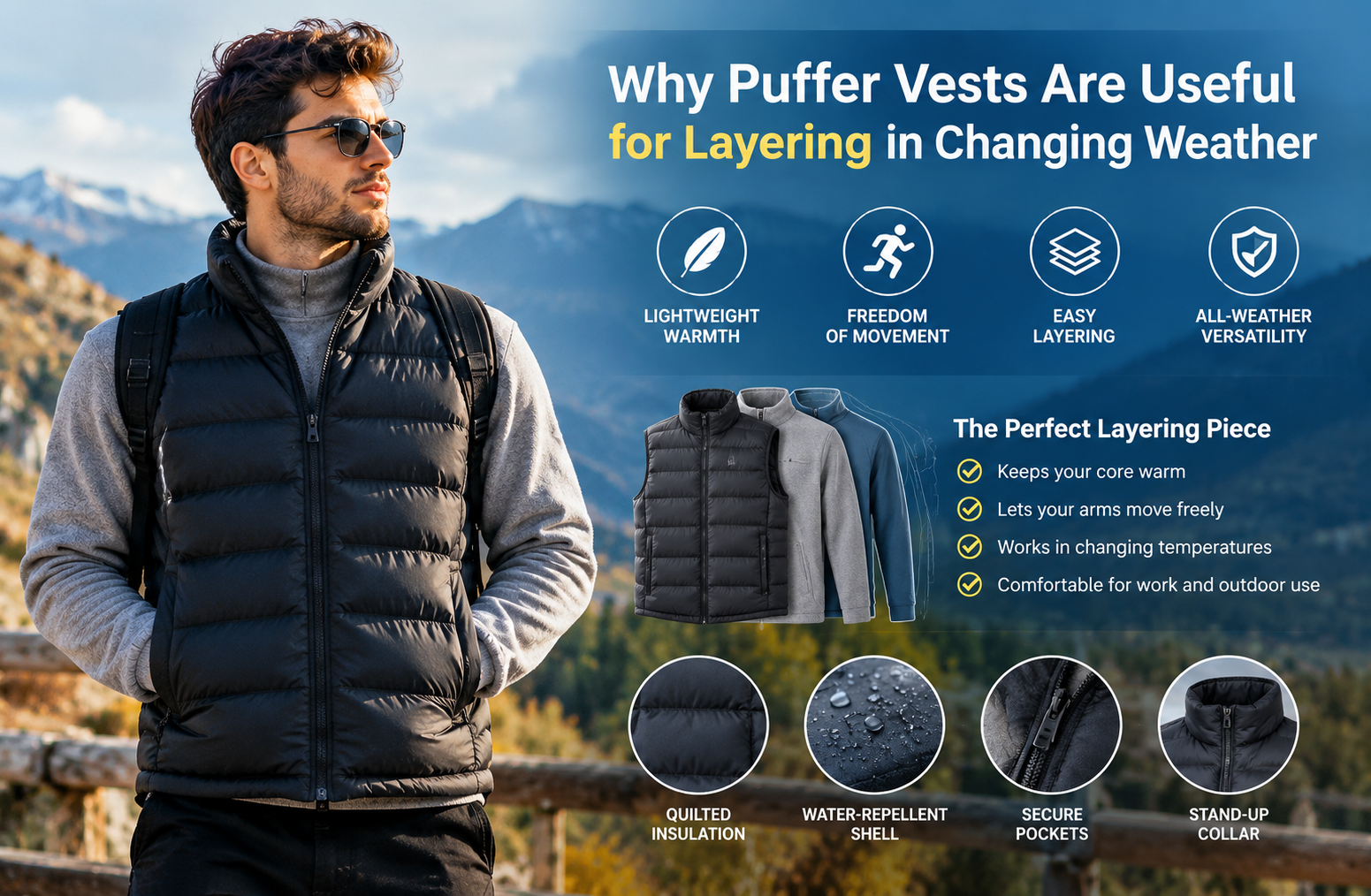
A sleeveless vest prioritizes breathability, agile mobility, and adaptable layering. By venting excess heat through open armholes and underarm seams, an insulated vest prevents sweat buildup during active physical labor while keeping the core warm.
The low-profile horizontal baffles of modern vests allow them to slip neatly underneath tailored workplace overcoats or waterproof shells without creating a bulky, stuffed appearance through the sleeves.
Modern Baffle Construction and Material Engineering
The durability and thermal performance of an insulated vest depend on the quality of its baffle engineering and exterior face fabrics. Narrow horizontal micro-baffles keep internal insulation evenly distributed across the chest and back, preventing fill fibers from slumping or bunching toward the waist hem after repeated laundering cycles.
High-density ripstop nylon or polyester shell fabrics are woven with tight thread counts to prevent fine insulation filaments from poking through the surface, while a durable water-repellent finish causes passing drizzle and mists to bead up and run off the exterior face.
Elasticized armhole bindings fit smoothly over underlying sweaters and flannel shirts, sealing out cold drafts without pinching under the arms, while an insulated stand-up collar protects the throat and back of the neck from biting breezes. Deep zippered hand pockets lined with soft brushed tricot provide a warm shelter for cold fingers and secure storage for phones, keys, and everyday work gear.
Sourcing Standards and Supply Discipline
Modern outerwear development blends functional thermal engineering with refined, everyday design. Sourcing durable insulated vests requires consistent stitch tension, dependable coil zippers, and quality materials that withstand regular workplace wear.
Brands like Simplstc Apparel apply these practical manufacturing principles across their outerwear lines, delivering clean, unlined shells and insulated mid-layers built to handle changing seasonal weather. Sourcing platforms like simplstcapparel.com show how technical insulation, weather-resistant shell fabrics, and minimalist cuts come together to provide dependable warmth without unnecessary bulk.
Inspecting seam finishes, pocket reinforcement, and zipper hardware ensures that each garment delivers reliable performance across dynamic work routines.
Everyday Layering Efficiency with Insulated Vests
Choosing the right puffer vest turns unpredictable seasonal transitions into comfortable, effortless experiences. By focusing thermal insulation directly over the torso, ensuring unrestricted arm mobility, and utilizing durable ripstop face fabrics, you secure a reliable layering piece that adapts naturally across diverse indoor and outdoor environments.
Understanding the balance between baffle design, fill materials, and modular shells turns seasonal dressing into an informed choice, keeping you warm, comfortable, and agile throughout the day.