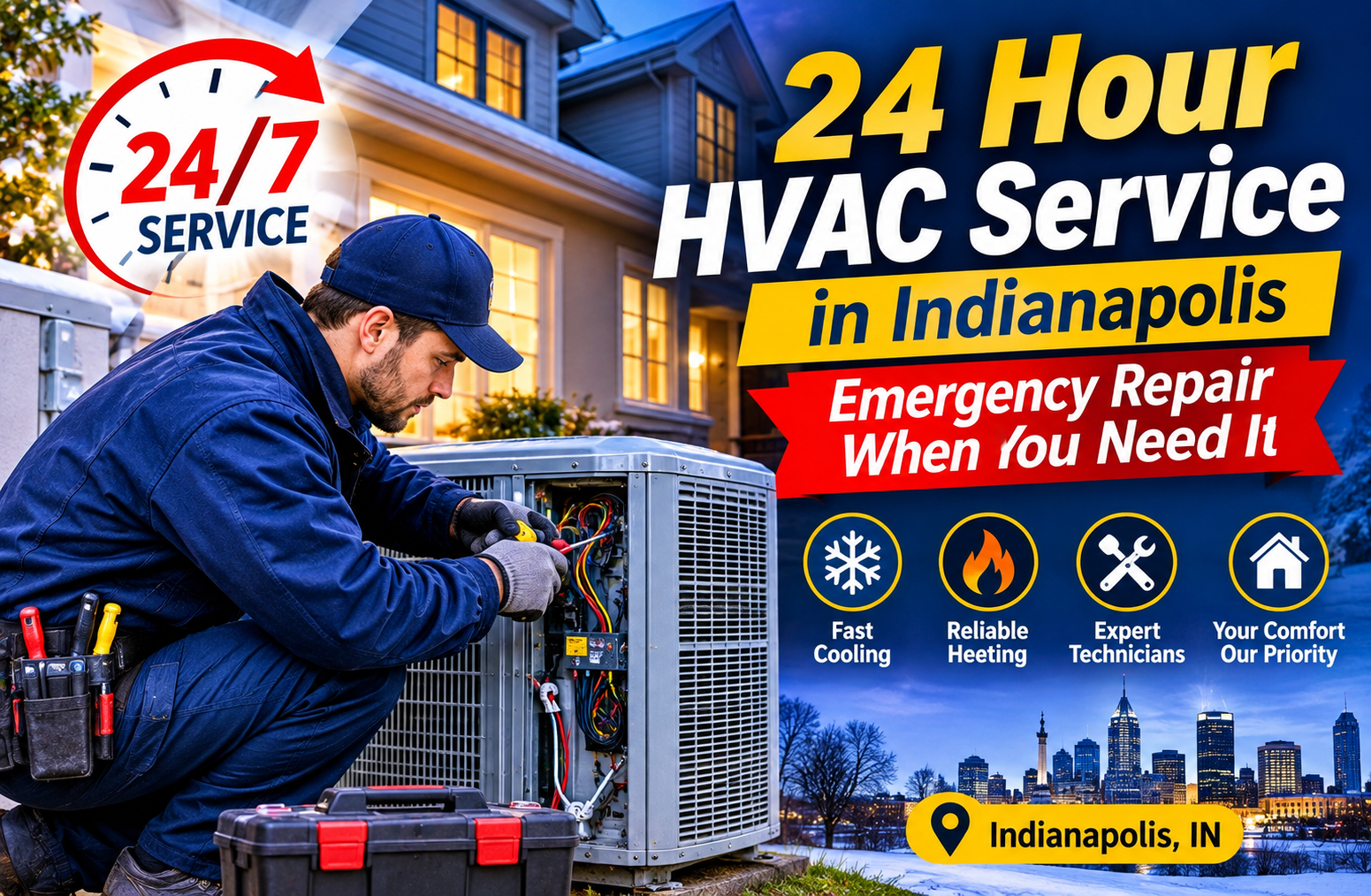
24 Hour HVAC Service in Indianapolis: Emergency Repair When You Need It
Understanding What Constitutes an Emergency HVAC Repair
Few things are more stressful than waking up to a sweltering home in the middle of a July heatwave or realizing your furnace has quit during a bitter Indianapolis winter night. When your heating or cooling system fails unexpectedly, the sudden loss of comfort can quickly turn into a significant safety concern. Understanding when to seek professional help is vital for maintaining a healthy living environment. Whether you are dealing with strange noises, persistent water leaks, or a complete system shutdown, accessing professional 24 hour HVAC service in Indianapolis, IN, ensures that your home returns to a safe, climate-controlled state as quickly as possible.
For more insights on keeping your home comfortable, visit our main guide. If you need immediate assistance, schedule your emergency HVAC repair here.
Contact our team today to get your system back in working order.
Not every HVAC hiccup requires a technician to arrive at 2:00 AM. However, when a system failure compromises the safety or structural integrity of your home, it moves from a mere inconvenience to a genuine emergency. HVAC systems are complex machines that account for nearly half of a typical home’s energy consumption, and when they fail, the consequences can be costly.
Critical Warning Signs That Require Emergency HVAC Repair
Recognizing the early warning signs can prevent a minor mechanical issue from turning into a total system collapse. You should consider calling for help immediately if you notice:
- Unusual Odors: A burning smell often indicates electrical components overheating, while a rotten egg smell could signify a gas leak. In either case, turn off the system and seek professional help.
- Electrical Burning or Tripping Breakers: If your HVAC system causes your circuit breaker to trip repeatedly, it is a clear sign of an electrical short or an overloaded system that poses a fire risk.
- Loud, Unnatural Noises: While systems hum during operation, screeching, grinding, or banging sounds suggest loose parts, broken belts, or failing motors.
- Water Leaks: Puddles forming around your indoor unit can lead to significant water damage to your flooring and walls, and often indicate a clogged condensate line or a failing pump.
- Frozen Coils: If you see ice buildup on your evaporator coils or refrigerant lines, it often points to airflow restrictions or refrigerant leaks that require immediate diagnostic testing.
Non-Urgent Malfunctions vs. True Heating and Cooling Crises
Distinguishing between a crisis and a condition that can wait until the next business day is key to managing your home’s maintenance budget.
Scenario Urgency Level Recommended Action No heat in sub-freezing temperatures High (Emergency) Call for immediate service AC failure during a heat wave High (Emergency) Call for immediate service System blowing lukewarm air Moderate Schedule for next business day Clogged air filter Low Replace filter yourself Minor thermostat calibration issue Low Adjust settings or replace batteries
How 24-Hour HVAC Services Operate During Off-Peak Hours
When you contact a provider for 24-hour service, you are essentially tapping into a specialized logistics chain. These companies utilize sophisticated dispatch protocols to ensure that an on-call technician is alerted to your location immediately. Unlike standard service calls, emergency visits are prioritized based on the severity of the situation.
Service trucks for these providers are stocked with a “critical parts” inventory—common capacitors, contactors, relays, and motors—that allow technicians to perform repairs on the spot without needing to wait for a warehouse to open the next morning.
Differences Between Standard Business Hours and Emergency HVAC Repair Calls
When you opt for emergency HVAC repair, the experience differs from a scheduled appointment in several ways. During standard hours, technicians follow a pre-planned route. During after-hours calls, the technician is often dispatched from their home or a standby location, meaning the response window is dictated by travel time and the complexity of the diagnosis. Because these services require specialized staffing, they often involve different fee structures compared to routine maintenance visits.
The Risks of Delaying Urgent System Repairs in Extreme Weather
In Indianapolis, our weather can be unforgiving. During a deep freeze, a heating failure is not just about comfort; it is about preventing frozen pipes that can burst and cause thousands of dollars in water damage. Conversely, during extreme heat, the elderly, young children, and pets are at risk of heat-related illnesses if their cooling system fails.
Protecting Home Safety and Preventing Compounding Damage
Ignoring a “small” problem often leads to a “catastrophic” one. For instance, a failing blower motor might start by making a slight noise, but if left to run, it could overheat, potentially damaging the control board or causing an electrical fire. Furthermore, if your system is running inefficiently due to a refrigerant leak, you are not only paying for wasted energy but also risking permanent damage to the compressor—the most expensive part of your HVAC unit.
How Homeowners Should Prepare for a 24/7 Technician Arrival
When you call for emergency help, you can expedite the repair process by being prepared. A little organization goes a long way in helping the technician get your system running faster.
- Clear the Area: Ensure the technician has easy access to your indoor unit, electrical panel, and thermostat.
- Document Symptoms: Write down exactly what happened—was there a noise? A smell? Did the power flicker?
- Safety First: If you suspect a gas leak or electrical fire, evacuate the home and call emergency services before worrying about the HVAC unit.
- Pet Safety: Please secure your pets in a separate room so the technician can work safely and efficiently.
Essential Pre-Call Checklist and Immediate Troubleshooting
Before you place that emergency call, perform these quick checks:
- Check the Air Filter: A blocked filter is the number one cause of system shutdowns.
- Verify Power: Check your circuit breaker panel to ensure a breaker hasn’t simply tripped.
- Check the Thermostat: Ensure it is set to the correct mode and that the batteries are fresh.
- Emergency Shutoff: If you see water leaking or smoke, locate the emergency power switch (usually a metal box on the side of the unit) and turn it off.
The Role of Preventative Maintenance in Avoiding After-Hours Breakdowns
While 24-hour service is a lifesaver, the best way to handle an emergency is to prevent it from happening in the first place. Statistics show that regular preventative maintenance can reduce the risk of major breakdowns by up to 90%. By scheduling seasonal tune-ups, you allow a technician to identify worn belts, failing capacitors, and dirty coils before they cause a total system failure. Many homeowners find that enrolling in a service contract provides peace of mind, as these programs often include priority scheduling, ensuring you are at the front of the line if a problem does arise.
Frequently Asked Questions About 24-Hour HVAC Service
How quickly do emergency HVAC technicians typically arrive?
Response times depend on your location, the current volume of emergency calls, and road conditions. Most reputable companies strive to provide a clear estimated arrival window, prioritizing those with no heat or cooling in extreme temperatures.
What should I do immediately if I smell gas or electrical burning from my HVAC system?
If you smell gas, leave the home immediately and call your utility provider or the fire department. If you smell burning plastic or electrical components, turn off the power to the unit at the thermostat and the breaker panel, then contact a professional.
Will regular seasonal maintenance prevent the need for emergency calls?
While no system is immune to failure, regular maintenance is the single most effective way to extend the lifespan of your unit and catch minor issues before they escalate into emergencies. It keeps your system running efficiently, which can account for significant energy savings over the lifespan of the equipment.
Conclusion
Your HVAC system is the heartbeat of your home’s comfort. While we hope you never face a middle-of-the-night breakdown, knowing that professional help is available 24 hours a day provides an essential safety net. By staying vigilant for warning signs, performing basic troubleshooting, and prioritizing regular maintenance, you can ensure that your home remains a sanctuary regardless of the weather outside. When the unexpected does happen, don’t hesitate to call for expert assistance to restore your peace of mind.