Late-Fall Yard Cleanup: What to Mulch, What to Compost and What to Bag
By late fall, most yards look like they lost an argument with the trees. The leaves are down, the perennials have flopped and the last storm left a scatter of branches across the lawn. The instinct is to rake everything into bags and haul it away, but much of that material is more useful staying right where it is.
Yard waste is a bigger part of household trash than most people realize. The EPA estimates that yard trimmings, meaning grass, leaves and brush, made up 35.4 million tons of municipal solid waste in 2018, or 12.1 percent of the total. The encouraging part is that 22.3 million tons were composted or mulched that year, a 63 percent rate, helped by state laws that discourage sending yard trimmings to landfills and by more people composting at home and leaving grass clippings on the lawn. Here is how to sort your own cleanup into what stays, what goes into the compost and what really needs to be bagged.
Mulch the Leaves Into the Lawn
If your leaf cover is light to moderate, you may not need to rake at all. Run a mower over dry leaves on the lawn, ideally with a mulching blade, until the pieces are roughly the size of a dime. They settle between the grass blades and break down over the winter, returning organic matter to the soil.
Thick layers are a different story. A heavy mat of whole leaves left on the grass blocks light and traps moisture, which can smother the lawn by spring. Mow those in several passes, or rake the excess into garden beds and the compost pile.
Rake Smarter When You Do Rake
When raking is unavoidable, a few habits save your back. Use a wide leaf rake on the lawn and a sturdier bow rake in beds and on gravel, and switch your lead hand every few minutes so one side of your body does not do all the work. Rake onto a tarp instead of into piles, then drag the tarp to the compost or the curb in one trip. Work with the wind, not against it, and pick a dry day, since wet leaves are heavier and mat together.
Put Leaves to Work in the Beds
Shredded leaves make a free winter mulch for perennial beds, shrubs and the vegetable garden. A layer of 2 to 3 inches insulates roots through freeze and thaw cycles, holds moisture and slowly feeds the soil. Keep it a few inches away from tree trunks and the crowns of perennials, where trapped moisture can lead to rot.
Leaving some leaf litter under shrubs and along fence lines also helps wildlife. Many insects, including some butterflies and moths, spend the winter in fallen leaves, and the birds that feed on them benefit in spring. A neat lawn and a slightly wild border can live side by side.
Cut Back Perennials Selectively
Not every plant needs to be cut to the ground in fall. Remove foliage that shows signs of disease, such as leaves covered in mildew or leaf spot, and bag it rather than composting it. Leave healthy plants with sturdy stems and seed heads, like coneflowers, black-eyed Susans and ornamental grasses, standing through the winter.
Those standing stems earn their place. Birds feed on the seeds, the stems catch snow that insulates the plant’s crown, and some native bees nest in hollow stems over the winter. Cut them back in early spring, before new growth starts, and the garden loses nothing but a few weeks of tidiness.
Start or Feed a Compost Pile
Fall is the best time to build a compost pile, because leaves supply exactly what most piles lack. Compost needs carbon-rich browns, such as dry leaves and small twigs, nitrogen-rich greens, such as food scraps and grass clippings, and water. The EPA suggests adding at least two to three times as much browns as greens by volume. A few bags of dry leaves stored beside the pile give you browns to mix in all winter as kitchen scraps pile up.
Keep a few things out: diseased or insect-infested plants, weeds that have gone to seed, trimmings treated with pesticides and, in a backyard pile, meat, dairy and pet waste. Turn the pile every few weeks, keep it about as damp as a wrung-out sponge, and by spring you should have dark, crumbly compost for the beds.
Bag What Has to Leave
Some material does need to go: thick branches, storm debris, sod from a bed you are expanding, soil, rocks and anything diseased. Before you bag a thing, check your town’s yard waste rules. Many programs collect leaves and brush only in season, and some accept yard waste only in paper bags or bins, not plastic. Branches often have to be cut to a set length and tied in bundles light enough for one person to lift.
Many towns also run curbside leaf collection in the fall, either by bag or with a vacuum truck that picks up leaves raked to the edge of the property. If yours does, learn the schedule and the rules before you rake. Some want piles at the curb but not in the street, free of branches and rocks, and some end collection in early winter. Missing the last pass usually means bagging everything yourself.
For debris that goes out with the trash or to a transfer station, ordinary bags are not enough. Branches, roots and rocks tear thin plastic, and wet soil and sod weigh more than they look. This is where heavy-duty bags earn their keep. Plastic Prince, for example, makes 3-mil contractor bags in the standard 42-gallon size, along with 65-gallon trash bags at 1.8 to 2 mil for bulky but lighter loads. Fill heavy material only partway, so the bag can be lifted without splitting, and twist and tie the neck before you carry it. If pickup is days away, keep the filled bags in a lidded can or the garage, where animals and wind cannot get at them.
Haul It Smart
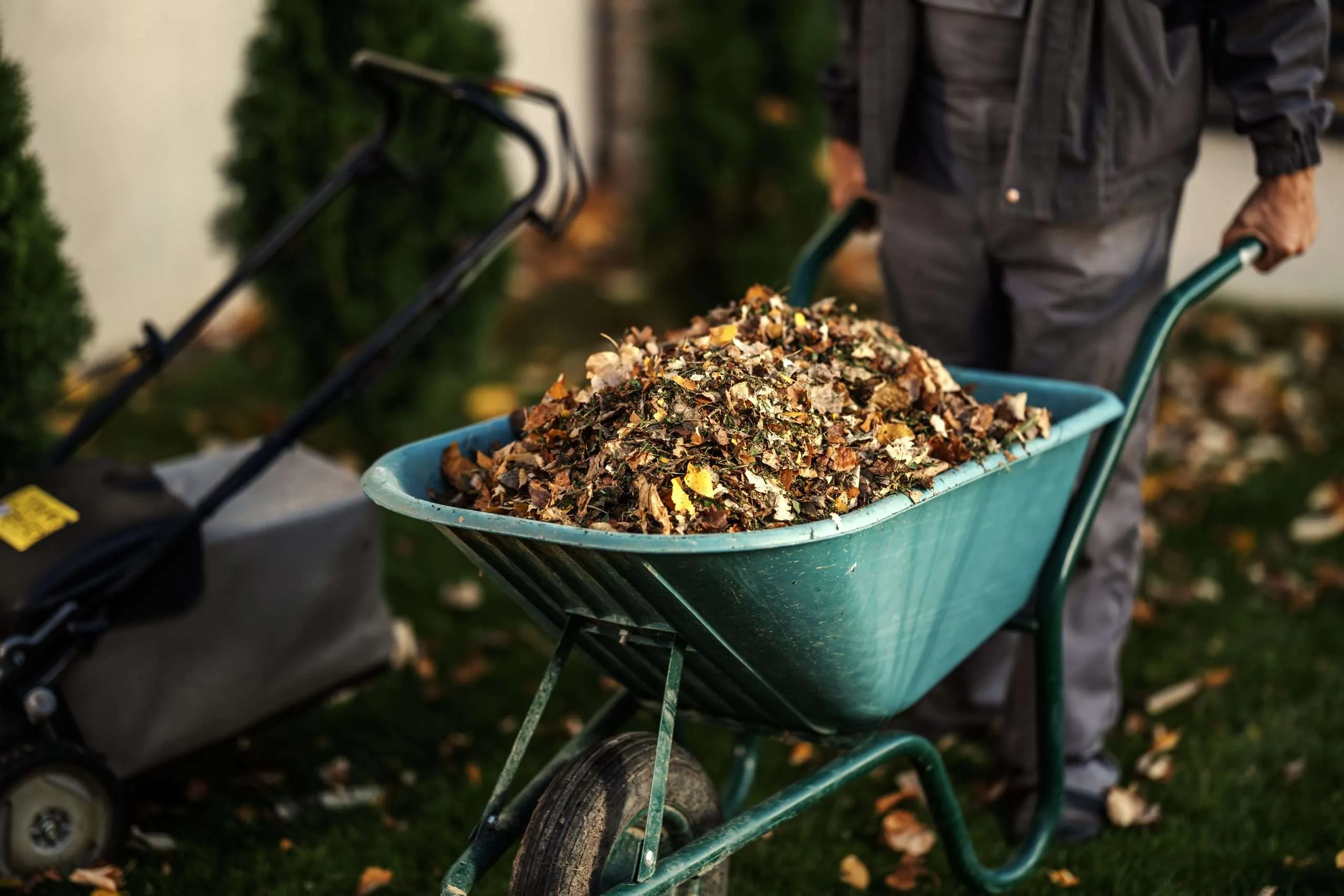
A wheelbarrow, a garden cart or a tarp you can drag saves your back and your bags on the way to the curb. Stage bags and bundles in one spot near the driveway instead of scattering them across the yard. Wear gloves and safety glasses when you cut and bundle branches, since a springy limb can snap back at eye level. If you have a lot of material, one trip to a compost site or transfer station can be faster than waiting through several weeks of curbside pickup, and many communities run drop-off sites for leaves and brush in the fall.
Keep bags and leaf piles out of the street and away from storm drains. Leaves that wash into drains can clog them and carry excess nutrients into local streams.
Clear the Gutters
Leaves that miss the lawn often end up in the gutters, where they block downspouts and send water over the edge, against the foundation or, in a freeze, back under the shingles as ice. Clean the gutters once most of the leaves have fallen, scooping debris into a bucket or onto a tarp below, then flush the downspouts with a hose to make sure water runs freely.
Gutter cleaning is also where fall cleanup gets risky. Set the ladder on firm, level ground, keep three points of contact and never lean out past the rails. If the roof is steep or high, this is a job worth hiring out.
Protect What You Planted This Year
Trees, shrubs and perennials planted this year have the shallowest roots in the yard. Water them deeply until the ground freezes, especially evergreens, which keep losing moisture through their needles all winter. Add a layer of shredded leaves or mulch around the base, keeping it off the trunk, and if deer and rabbits are common in your area, protect young trunks with a guard.
Put the Yard to Bed
Once the debris is handled, finish the season with a few small jobs:
- Clean, dry and oil the blades of shovels, pruners and rakes before you store them.
- Drain and coil garden hoses, and shut off outdoor faucets before the first hard freeze.
- Empty and store clay and ceramic pots, which can crack in freezing weather.
- Give the lawn a final mow a little shorter than usual, which helps discourage snow mold.
Less Hauling, Better Soil
The best late-fall cleanup is not the one that fills the most bags. It is the one that keeps leaves and trimmings working in your yard, sends away only what truly has to leave and puts your tools away ready for spring. Do it that way, and you will rake less, haul less and start next season with better soil.