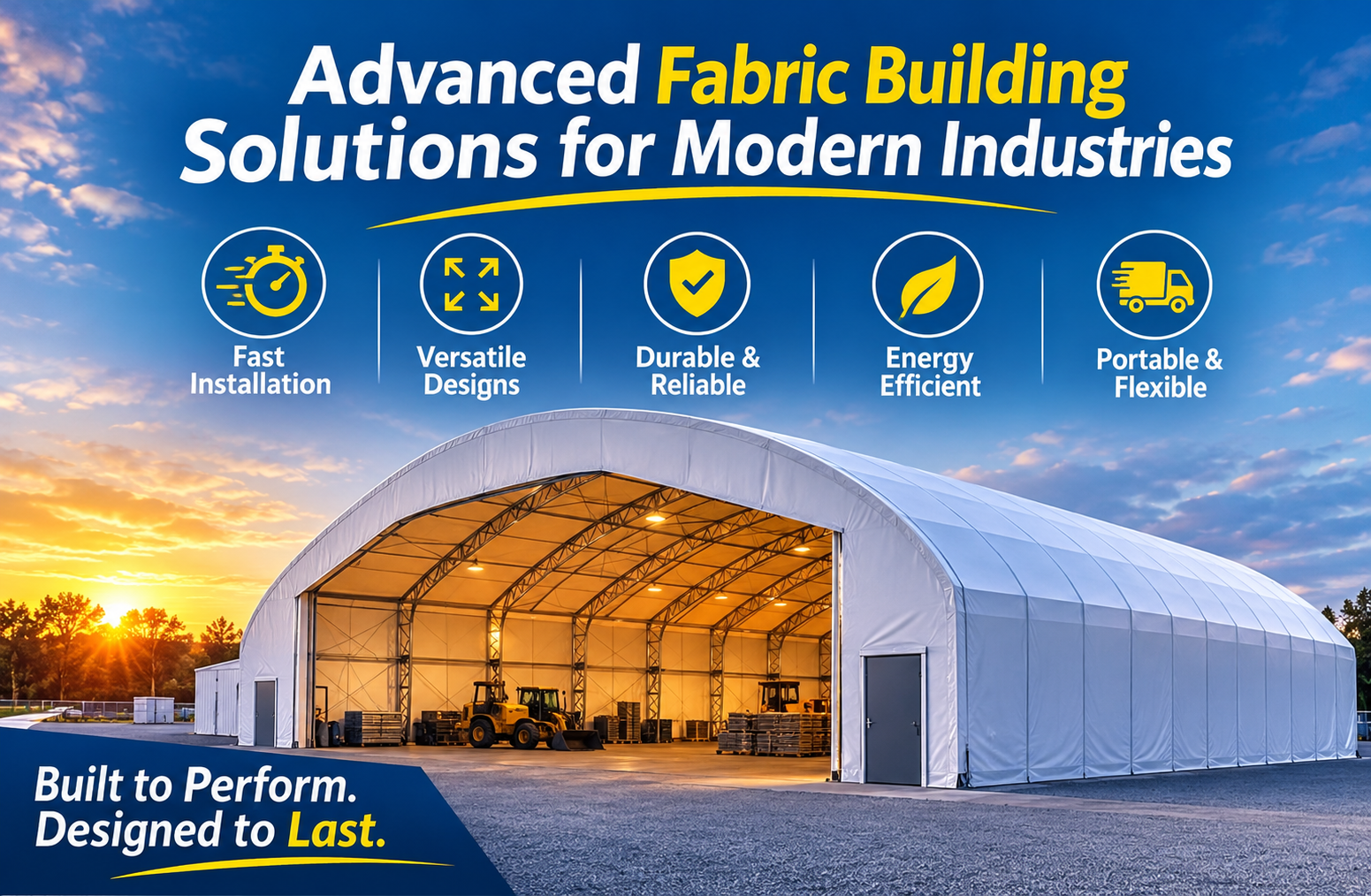
Advanced Fabric Building Solutions for Modern Industries
When you need a building that can go up fast, move when you need it to, and still stand strong against whatever the weather throws at it, fabric buildings are worth a serious look. A.C.E. Structures has been in this business for over 60 years, designing, manufacturing, and installing fabric structures for all kinds of industries. From construction sites and aviation hangars to mining operations in remote locations and research facilities in the Arctic, these buildings have proven themselves in some of the toughest conditions imaginable.
What makes these structures stand out is how practical they are. They are lightweight but durable, versatile enough to handle almost any use, and built to last for decades. Whether you need something temporary for a short-term project or a permanent fabric structure that will serve your operation for years, there is a solution that fits. The team at A.C.E. Structures works closely with each client to understand the specific needs of the project and delivers a building that meets those requirements without unnecessary complications.
Built to Move When You Need It
One of the biggest advantages of fabric buildings is how portable they are. Traditional brick-and-mortar buildings stay put once they are built, but fabric structures can be dismantled and relocated from one site to another with relative ease. The materials are prefabricated, which means they are designed for transport and quick assembly. Foundation requirements are minimal, and these buildings can be installed on almost any level surface, including concrete, wood platforms, pilings, and helical systems. In some cases, they can even be set up on an existing permanent foundation and then taken down later when the project is done.
This kind of flexibility is a game-changer for industries that work across multiple locations or need to scale operations up and down. Instead of investing in a fixed building at every site, you can move your structure wherever it is needed most. That saves money and time while keeping your operations running smoothly.
Versatility That Covers Almost Any Use
Fabric buildings are not one-trick ponies. They come in hundreds of sizes and styles, and they can be customized with add-ons like HVAC systems, insulation, lighting, electrical setups, and rolling track systems. Whether you need storage and warehousing space, a vehicle maintenance facility, a modular office, workforce housing, or even a movable airplane hangar, there is a fabric building design that fits the bill.
The engineering behind these structures means they perform well in any climate. High winds, heavy snow loads, extreme heat, and bitter cold are all part of the picture, and these buildings are designed to handle them. The customization options also allow for creative solutions when a site has an odd shape or when a project calls for something outside the standard template. Specialists work with clients to adjust dimensions, roof pitch, and peak height so the final product works exactly as intended.
More Usable Space Inside
If you have ever walked into a traditional warehouse and noticed all the support columns breaking up the floor space, you will appreciate what a fabric building offers. These structures have no internal posts, pillars, columns, or beams. The high ceilings and open interior mean you get the maximum amount of usable floor space. That is a big deal for operations that need to store oversized equipment like helicopters or crushing machinery, or for warehouses that want to stack goods higher.
The absence of internal supports also makes it easier to move around inside, whether you are running forklifts, moving large vehicles, or setting up workstations. Every square foot of floor space is available for operational use, which is not always the case with traditional buildings that require rigid support posts to hold up heavier roofing materials.
Faster Construction Means Faster Results
Time is money in any industry, and fabric buildings deliver on both fronts. Conventional construction projects can take months or even years to complete, but fabric structures are engineered for quick setup. Fewer materials are involved, and the prefabricated design means the building can be ordered, manufactured, installed, and fully operational in as little as 60 to 90 days in some cases. That timeline depends on the size and scope of the project, but the point is clear: you get your building faster and start using it sooner.
That speed translates directly into cost savings. When your building takes days or weeks instead of months or years to construct, you are not paying for extended labor, equipment rentals, or delays caused by weather and scheduling conflicts. You also get to start generating revenue or supporting operations much sooner, which is a real advantage in competitive industries.
Energy Efficiency That Saves Money
Fabric structures are naturally more energy efficient than traditional buildings. The materials used in the membrane and frame systems help regulate interior temperatures without relying heavily on HVAC systems. In cold weather, these buildings stay around 10 degrees warmer than the outside temperature, and in hot weather, they stay nearly 20 degrees cooler. That is without any heating or cooling equipment running.
For operations that need more control over the interior environment, insulation and liner packages are available to boost efficiency even further. The materials used in fabric buildings are also more environmentally sustainable than those used in traditional construction, and some can even earn LEED points. The PVC-based membranes are manufactured with strict quality control to ensure they last as long as possible while keeping environmental impact low.
Durability You Can Count On
These buildings are built to last. The frames are made from high-strength galvanized steel or aircraft-grade aluminum, both treated to resist corrosion. The fabric membranes are UV stabilized, resist mold and mildew, will not rot, and meet fire safety requirements outlined in the California Code of Regulations for membrane structures. They are independently tested and verified for proper design and construction, and they meet or exceed local and regional building codes.
Whether a permanent fabric structures is installed for the long haul or a building is relocated frequently, the durability holds up. These structures have been proven in the field to withstand extreme weather and climate conditions, and they can be relied on for decades of service. That kind of reliability matters when your operations depend on having a safe, functional space that will not let you down.
A Partner Who Understands Your Needs
A.C.E. Structures takes a collaborative approach to every project. The team of engineers and fabricators works closely with clients from the initial design phase through manufacturing and installation. They use the latest technology and advanced manufacturing processes to ensure precision and quality in every building they deliver. Attention to detail is a priority, and the goal is always to exceed expectations.